

10 May 2026 From tragedy to purpose
By Donna Lampkin Stephens
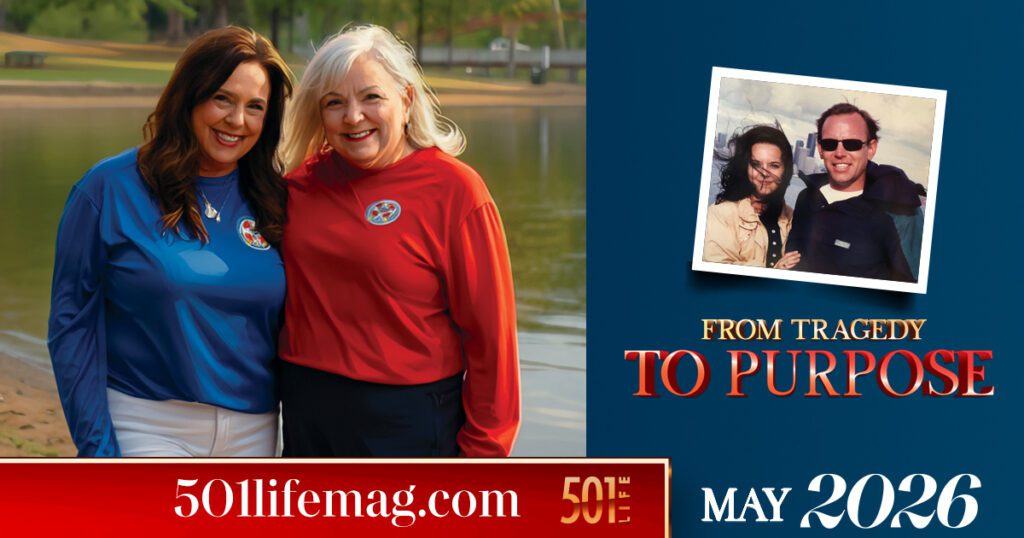
Twenty-three years ago, Melanie Brindley’s husband drowned on a family vacation in Florida after saving a 12-year-old boy from a rip current.
among the top five states for drowning fatalities, their
mission is more important than ever.
They will host a public event June 6, here at Beaverfork Lake. Photos by Makenzie Evans
The boy survived, but then Ken swam out to save the boy’s father, who had also been carried away by the current. The father drowned, and Ken died two days later in an ICU.
Over the last several years, Melanie Brindley has turned her family’s experience into a calling to promote water safety education in Conway and around the state.
“It was a process to be able to do something,” she said. “And it didn’t come in a timely manner. Grief doesn’t just happen in six months or a year, and it’s different for everyone. It’s a long process in itself.”
Her daughter, Madeline Baker, now 29, planted the seed for what would become the family’s focus. As a young teen, she got involved in pageants, and that experience required a platform. One of her pageant mentors suggested water safety as an ideal topic for her.
“Prior to that, I really had only done counseling for myself and the kids, and I hadn’t put any effort to get myself out there or to try to speak on water safety,” Brindley said. “In the back of my head, I had always thought that was such an important thing because drowning is a preventable death. But I didn’t really know how to go about doing anything.”
So they dived into research and learned there was a large community with similar stories as theirs. They got to know fellow survivors, some of whom helped advise Madeline as she wrote and published a 2014 children’s book, “The Royals Go to the Beach,” which addresses water safety and rip-current awareness.
Other groups supporting the Brindleys included Families United and Waves of Hope. “They are the family groups who become our extended families and our backbone or our shoulder to cry on,” Brindley said. “They’re open to any person who’s lost someone to drowning or been affected by a water accident.”
Through those contacts, she learned of the National Drowning Prevention Alliance and its annual conference. She had begun to think of starting a foundation but wasn’t sure how to do it, and the conference connected her with others who could help her.
One of those was Karen Lamoreaux, founder and owner of Safety Before Skill Swim School, which has locations in Conway and Little Rock. “Karen’s the one who helped me get the foundation started,” Brindley said. “She gave me the little incentive I needed to go ahead and get it done and also the belief in me that I could. Up to then, being a single mom with two kids in high school and junior high, I wasn’t sure how I could add anything else.”
In 2018, the Ken Brindley Memorial Foundation was established as a 501(c)(3) nonprofit to support drowning prevention in Arkansas.
According to a foundation press release, drowning is the leading cause of death for children between 1 and 4 in the United States and among the top causes of death among older children and teens.
Arkansas regularly ranks among the top five states for drowning fatalities, according to the U.S. Coast Guard and the Office of Homeland Security. In 2025, 17 people died in boating accidents in Arkansas, the most since 2009, and the 73 boating accidents were the most since 2020, according to the Arkansas Game and Fish Commission.
Margie Pulley, a board member of the foundation, said there were multiple reasons for that, including the state’s abundance of lakes, rivers and streams, coupled with a lack of education about water safety and availability of free or low-cost swimming lessons.
For Pulley, friends of the Brindleys since the mid-1990s, water safety has been a lifelong passion. Her family has owned a home on the Spring River since the mid-1950s.
“My mother required my sisters and me to become lifeguards as soon as we could,” she said. “After that, I went on and became a water safety instructor and taught Red Cross learn-to-swim lessons for years. Water safety has been a part of my life for as long as I can remember.”
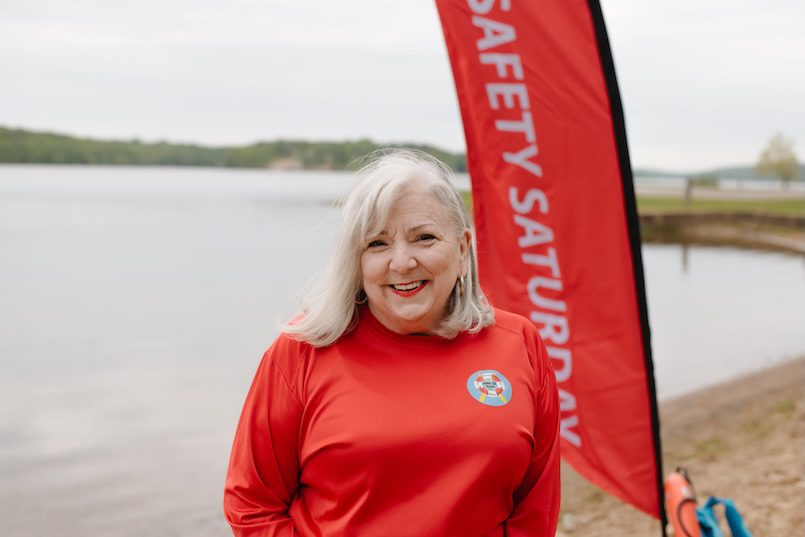
She has taught a wide variety of swimmers — children, mothers and infants, mentally- and physically-challenged adults.
She has also seen tragedies first-hand.
“Unfortunately, I have had the experience of pulling struggling non-swimmers out of the water, being a witness to a rafting accident that involved a family with a small child,” Pulley said. “A group of us were able to help the father and 2-year-old son, but the mother did not survive. Most heartbreaking of all was the drowning death of my son’s best friend after he learned to swim in our backyard, but ultimately made a poor choice that cost him his life.
“That is the thing — practically all drownings are preventable.”
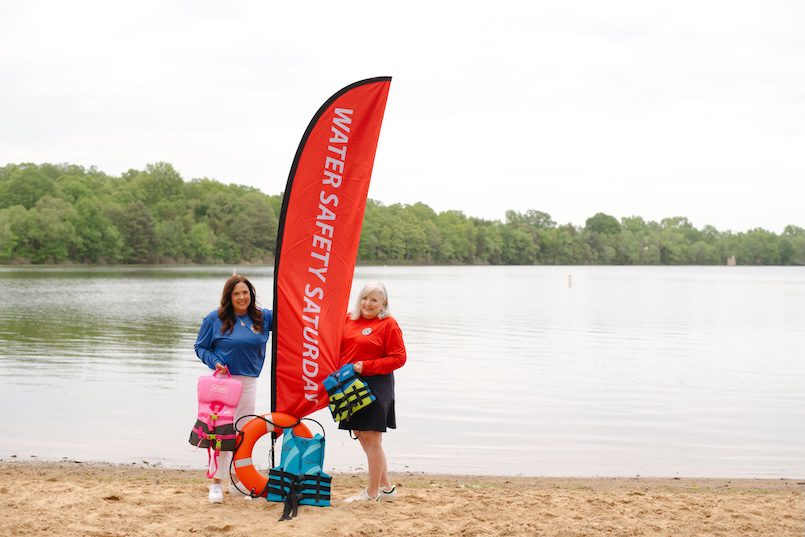
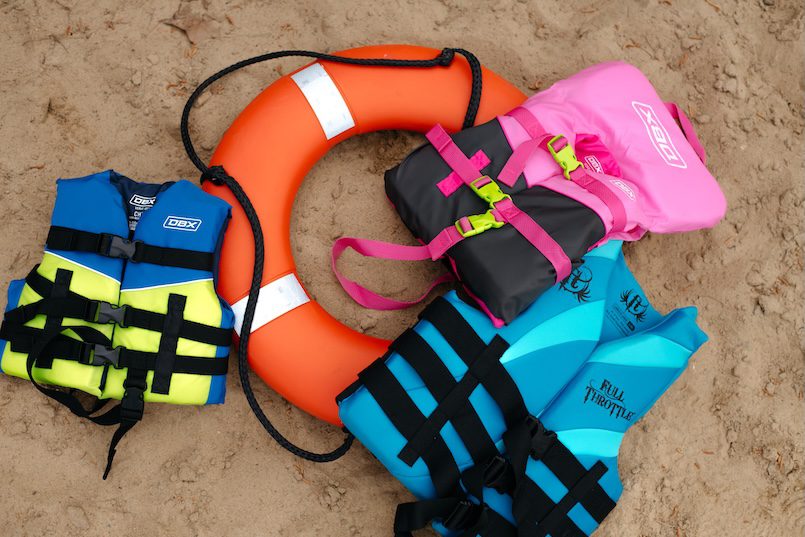
The foundation’s major outreach event is Water Safety Saturday, scheduled for June 6 at Beaverfork Lake Park in Conway. The event will include water safety, emergency response demonstrations, hands-on children’s learning activities and life-jacket fittings and giveaways. Pulley said the foundation had given away more than 150 life jackets over the last two years.
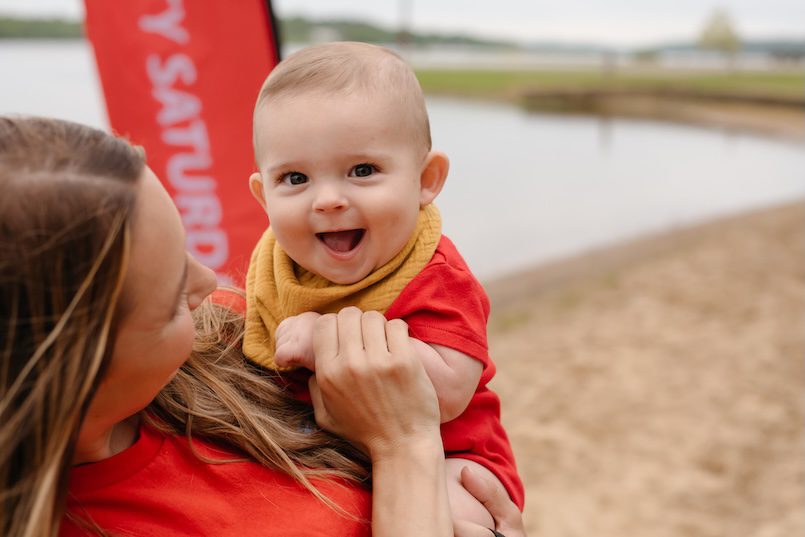
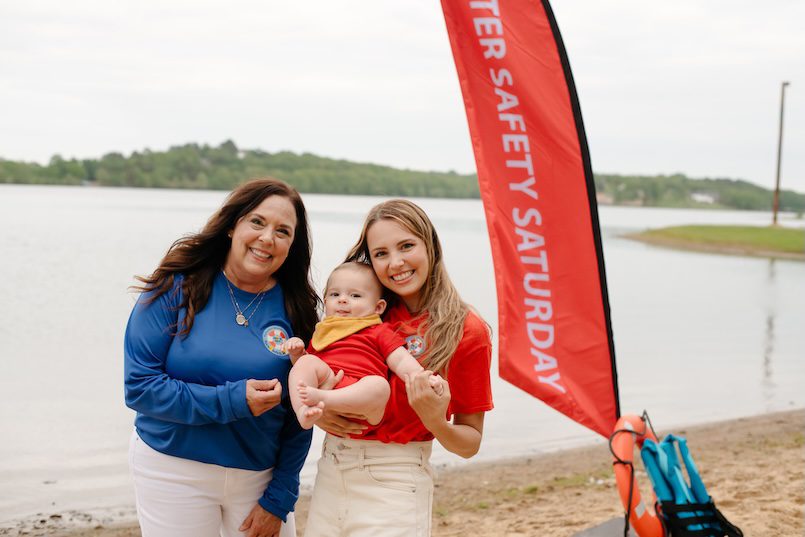
“We’ve seen a family of six all put life jackets on and go out and play in Lake Beaverfork,” she said. “We have life jackets for infants to adults. We prefer if the adult can swim, but if the adult can’t swim, you’d better believe we’re putting them in a life jacket.”
The foundation is funded by a grant Brindley has written every year to the National Safe Boating Council and the U.S. Coast Guard, although she is concerned those federal grants may diminish or go away. Sponsorships for Water Safety Saturday round out the budget.
Looking back on that fateful day, Brindley said she thought if her husband had worn a life jacket or had a floating ice chest with him, he would have survived.
“We didn’t know then to take precautions,” she said. “We needed to perhaps have something like an adult life jacket, a long rope, a floating ice chest or pool noodles. We didn’t know any of those should’ve been taken out with him, and if he didn’t have anything, he shouldn’t have gone out but should have kept his eye on them and waited on the authorities. I am glad the child was saved, but it was very tragic that both fathers had to die.
“I do think we’re making progress in getting the word out to people that there are things you can do. When you’re on vacation and at a beach with a flag system, follow it. If it is a red flag day, don’t go in. If it’s a yellow flag, put your children in life jackets because things can change in a minute.”
- The comeback coach - June 14, 2026
- From tragedy to purpose - May 10, 2026
- The Wednesday Table - March 15, 2026