

10 May 2026 Amanda Mathis: The path to impact
By Judy Riley
As a young girl growing up on a cattle farm in Little Arkansaw Community in Northwest Arkansas, Amanda Mathis could not have predicted the life she would lead. What she did know from early on was that she loved being around animals, farming and water of any kind, especially creeks.
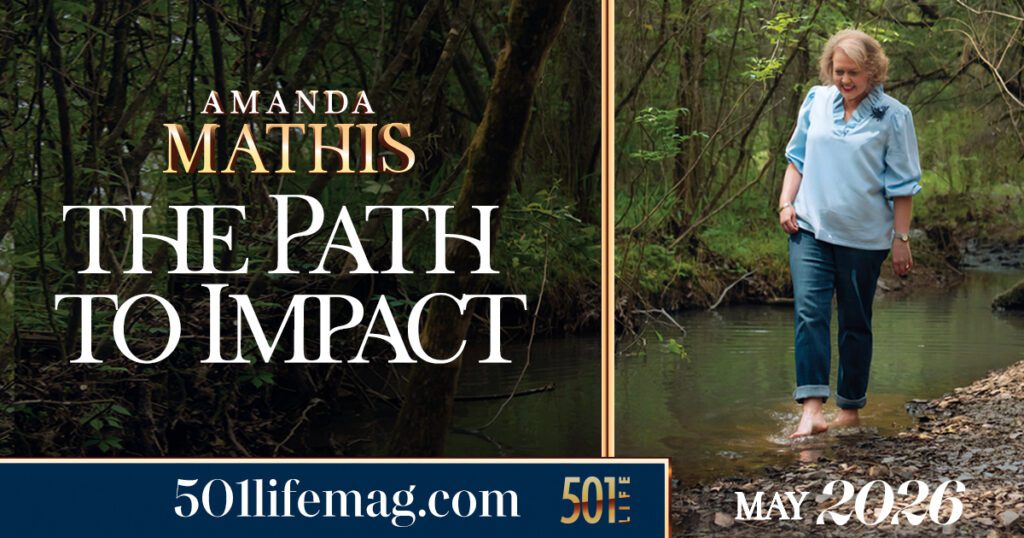
While many follow a meandering career path before getting the job of their dreams, Mathis took advantage of every opportunity to learn and grow as her pathway to success. After a 20-year career with the Natural Resource Conservation Service (NRCS), working in various positions and locations, she was named Arkansas’s State Conservationist in 2025. It was a milestone for Arkansas: Mathis is the first woman to take charge of the state’s federal agency.
She credits her late father, Frank Mathis, for her ability to speak with ease and to form lasting relationships with anyone, young or old, rich or poor. “With my dad, there were no excuses and no limits. If you wanted something, you worked for it and made it happen. He was a World War II veteran, part of the Greatest Generation and my constant encourager. My mother was one of the women described in Proverbs 31. She put up with three strong-willed people, my dad, my brother and myself. It was an ideal life,” Mathis said.
Her formal training was at College of the Ozarks in Point Lookout, Mo., where she was one of the school’s first students graduating with a degree in conservation and wildlife management. She had found her niche, marrying her love for nature and agriculture. She later received a Master of Science in crop, soil and environmental sciences at the University of Arkansas while working full-time for NRCS.
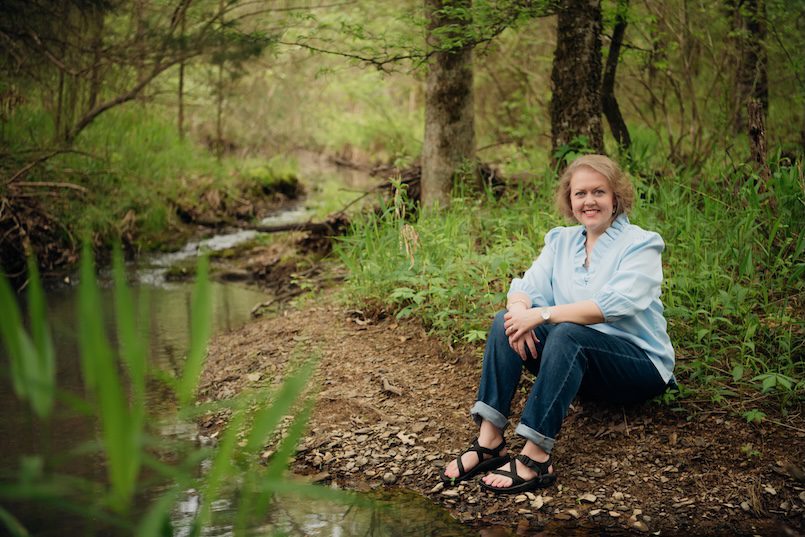
By no means did Mathis start at the top. She literally worked her way up, beginning as an NRCS volunteer while in college. Her first job after graduating was as a soil conservationist in Paris (Logan County), then she worked in Carroll County, closer to home. She expected to stay there, but opportunity knocked. Away she went to become the District Conservationist in White County, the place she now calls home.
Mathis is quick to credit many mentors who recognized her talent, appreciated her work ethic and encouraged her. One of those was Mike Sullivan, recently retired state conservationist for NRCS and her former boss. “Early on, we saw Amanda as a critical thinker, problem solver and good people skills. She was definitely the best candidate for the job,” he said.
Mathis excelled, not just as a knowledgeable public speaker, but as a recognized leader. Sullivan encouraged her to apply for NRCS’s Emerging Leader Development Program. That experience exposed her to a greater understanding of the agency’s programs and partners, and led her to be named assistant state conservationist, one step closer to her current job.
Mathis worked closely with the Arkansas Conservation Partnership. Her success led her to temporary positions as acting state conservationist in two different states – Oklahoma and Louisiana. That experience added to her opportunities to learn from and interact with others in her field. “Amanda has a unique ability to seek input and adapt solutions to get unique involvement from partners. All that is critical to serving the conservation community and the state at large,” said Debbie Moreland, executive director of the conservation districts, representing one of the partners.

NRCS is an agency within the U.S. Department of Agriculture. It began in 1935 as the Soil Conservation Service, part of President Franklin Roosevelt’s New Deal. Its creation was a response to the Dust Bowl and the urgent need to address soil erosion. That purpose still exists today, but with broader implications. In 1994, the name was changed to reflect the expanded mission. That includes water conservation, plant health and wildlife habitat.
NRCS helps people help the land through a partnership with conservation districts. “We work with private land owners – farmers, ranchers and forest landowners to conserve natural resources through an entirely volunteer approach. We provide one-on-one, science-based guidance to help producers address natural resource concerns: soil erosion, water quality, soil and plant health and wildlife habitat. We do that by developing site-specific conservation plans that identify practices that fit producers’ goals and their land’s needs,” Mathis said. She works with other federal and state partners to collaborate on projects. She has learned that entities can do more collectively than alone.
What is the impact on Arkansans’ everyday lives? Plenty. They help landowners keep streams and creeks clean, minimize runoff, protect water and build healthy soils. That means clearer lakes and streams, healthier food and better wildlife habitat for hunting and fishing.
Mathis has an engaging smile and an enthusiasm that is contagious. She is humble and quick to credit others, yet she supervises staff in 61 field offices. Through two of their working lands programs, the Environmental Quality Incentives Program and the Conservation Stewardship Program, Mathis oversees more than 5,000 projects that will implement conservation on 2.1 million acres throughout the state. The total funds exceed $479 million, protecting the state’s soil and water resources.
She is fulfilling her childhood dream by living on a cattle farm by a creek. The creek was a “must-have” in the property she and husband Kevin Cochran bought in White County, located between El Paso and Mount Vernon. What she might not have envisioned was the opportunity to have an impact in the state as a whole with practices that help everyone’s lives. Yes, Mathis is a force and a wonder in the 501!