

15 Feb 2026 A man at home in history
By Kelli Reep
For more than two decades, Chris Dorer has stood at the front of a classroom at the iconic Little Rock Central High School, guiding students through sweeping world narratives, long-forgotten stories and the subtle cause-and-effect chains that shape civilizations. Yet even with the daily demands of teaching Advanced Placement World History and AP European History, Dorer’s impact reaches far beyond the walls of the school. His life’s work, which is deeply rooted in storytelling, community and a profound belief in the power of human connection, has quietly shaped one of Central Arkansas’s most unique enclaves: Little Italy.

“I was always drawn to history because it is a giant story that fits together like a puzzle,” he said. “I knew early on I wanted to teach. I wanted to share the amazing untold stories that exist.”
Dorer’s professional title, chair of the history department at Little Rock Central High School, captures only a fraction of what he means to generations of students. For him, teaching has always been much more than delivering content or preparing students for exams.
He recalled a favorite quote from Henry Adams: “A teacher affects eternity; he can never tell where his influence stops.” It’s a line he not only admires but embodies.
“There are always going to be people who are smarter or more likeable, but what makes me passionate about my work is the act of sharing,” he explained. “I believe every teacher, and really every human being, has an obligation to share pieces of themselves with others. I try to leave each encounter meaningful. When I teach, I learn as much, if not more, from my students.”
Nothing brings him more pride than the messages he receives from former students years later. Those notes, he said, are proof that the ripples he sends out into the world continue long after the classroom lights are turned off.
To understand Dorer is to understand Little Italy, the place he described as “our own little slice of heaven,” where quiet hills, tight-knit families and a shared heritage make life feel both simple and deeply meaningful. His connection to the community is lifelong, and his investment is intentional.
“Little Italy is a prime example of one of those untold stories,” Dorer said. “For the last 25 years, I’ve tried to bring its storied past to the forefront.”
In 2018, he helped found the Little Italy Arkansas Heritage Society, and just one year later, he played a key role in opening the Little Italy Arkansas Heritage Museum. Today, he serves as the museum’s curator and the president of the Heritage Society.
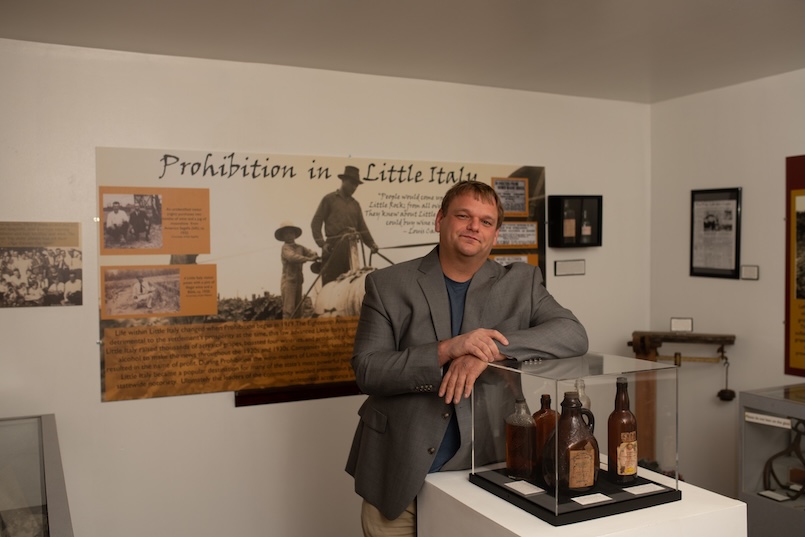
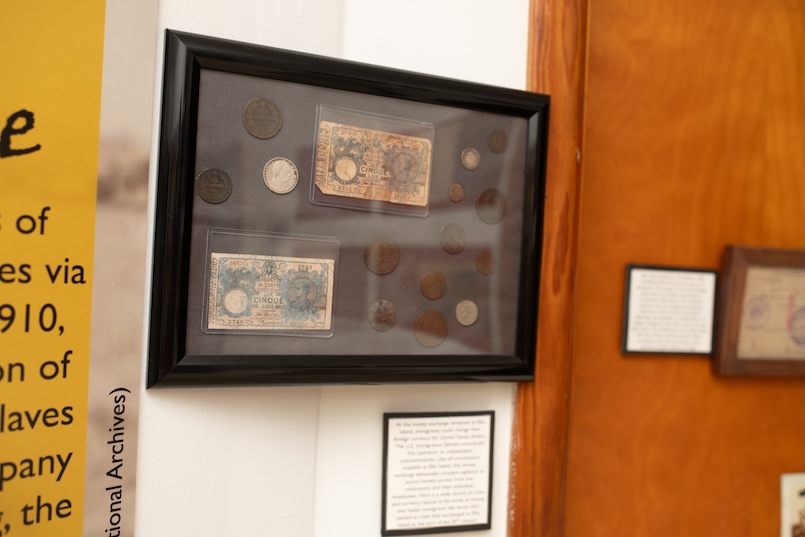
For a privately funded, volunteer-driven museum, the achievements are remarkable. Through carefully curated exhibits, original artifacts and lovingly researched displays, the museum preserves the history, culture and customs of the Italian immigrants who settled in the area at the turn of the 20th century.
“In many ways, Little Italy’s history mirrors the stories of families coming to America today — people searching for opportunity, facing hardship and working relentlessly for a better life,” Dorer said. “They deserve to be remembered.”
His scholarly contributions, which include a trio of published books, multiple academic articles and continued research, further strengthen Little Italy’s historical footprint, ensuring its people, customs and challenges are never lost to time.

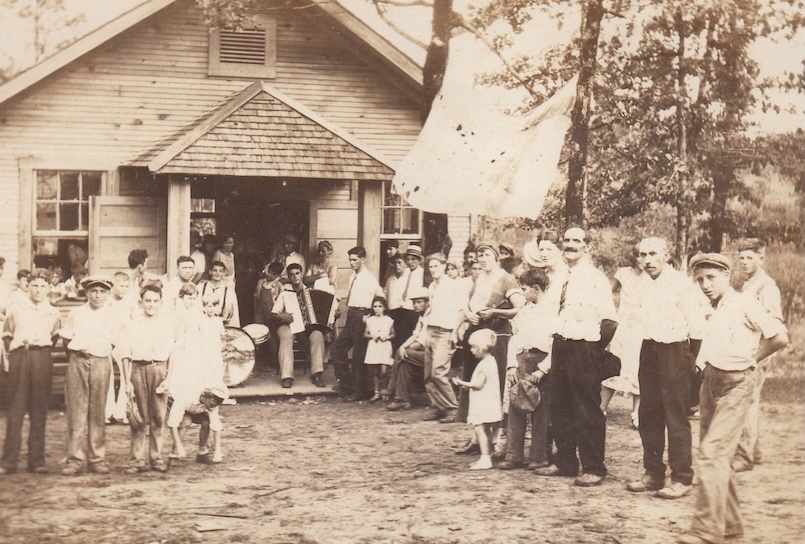
He has also helped organize the community’s beloved Italian Festival since 2002, an event dating back nearly a century to 1927. The festival has become both a celebration and a bridge connecting generations. When asked what he loves most about his hometown, Dorer did not hesitate.
“Resilience,” he said. “I’ve always rooted for the underdog. The people of Little Italy have never really received the attention they deserve, yet they continue to work hard and take care of each other.”
He likens the community to a family, one that is strong, connected and unfailingly supportive. “This place is defined by perseverance and cooperation,” he said. “That doesn’t mean there aren’t troubles, but at the end of the day, neighbors help neighbors. Family does for family.”
Through his teaching, community leadership and preservation work, Dorer has cultivated an enduring legacy, one built not on accolades but on authenticity, humility and service. He credits much of his grounding to his own family: his wife, Samantha, to whom he has been married 22 years, and their daughter, Allison, a student at the University of Central Arkansas.
In 2026, he hopes to continue improving both his professional impact and the lives of others by deepening the museum’s offerings, connecting more people with Little Italy’s cultural story and continuing to mentor and teach the young people who fill his classroom each day.
“I want to be known as a person who was always willing to work and to learn,” Dorer said. “Someone who valued understanding and people’s individual stories. A person who never shied away from hard work and was proud of the people he influenced and the people by whom he was influenced.”
A compilation of excerpts from “Little Italy” By Chris Dorer
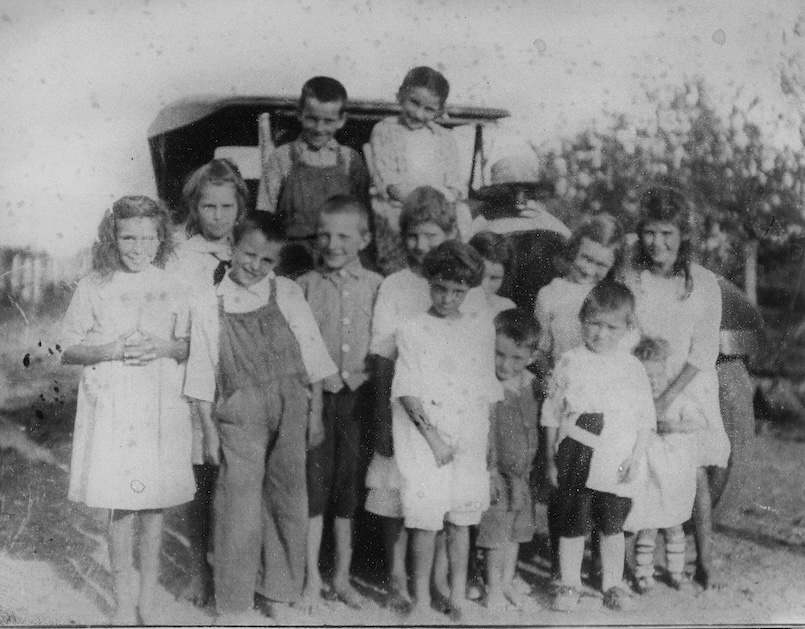
The families who settled Little Italy (in Perry and Pulaski Counties) in 1915 were among the political and cultural refugees of post-unification Italy. As young adults, they abandoned the tumultuous environment of their homeland in search of freedoms they believed were only attainable in America. Like many of their countrymen, the founders of Arkansas’s Little Italy arrived in the United States and settled in Chicago.
Most immigrant men arrived alone; they found work, settled into dwellings, and sent for their families. Despite the new setting, the cycle of oppression they abandoned across the Atlantic reemerged in America. Poor earnings from factory jobs provided only enough for essentials. Without the availability of land in cramped neighborhoods, there was no possibility of supplementing the food they purchased with homegrown vegetables; they yearned for an opportunity to leave Chicago.
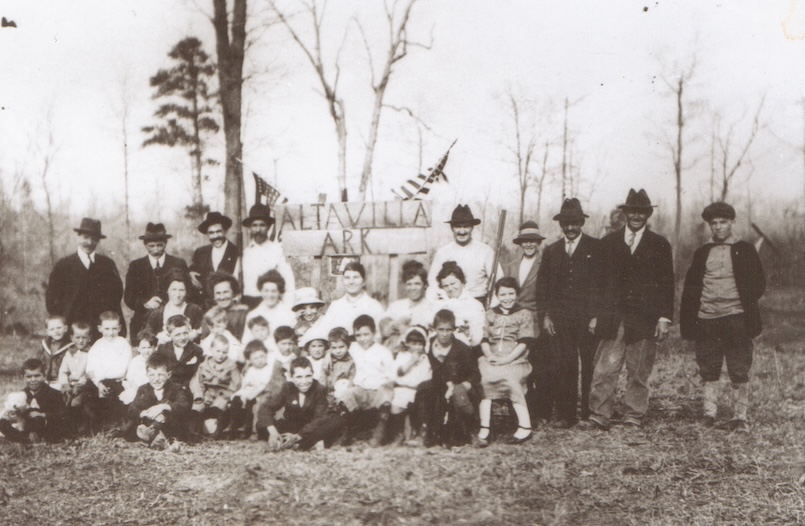
Meanwhile, at the turn of the 20th century, the promise of quality farmland drew interested buyers to Arkansas. Land agents promoted the possibility of “colonization” or the settling of an area by a particular ethnic group. Agents advertised land in the “Highlands of Perry and Pulaski Counties” for as little as a few dollars per acre. Five men traveled to Arkansas in the summer of 1915, and the Italians were astonished to find that the foothills of the Ouachita Mountains greatly resembled the hills of their Italian homeland.
In December 1915, five families traveled from Chicago by train to a small town named Ledwidge located along the Arkansas River. The immigrants loaded their belongings onto wagons and made their way to the land they had purchased two miles away, to an area originally called Alta Villa (the high place). They settled into a shell of a home, which they had ordered built, and while other houses were constructed, the families cohabited, one in each corner of the home and one upstairs. By spring, they began cultivating the land. Using their knowledge of grapes, they planted hundreds of acres of vineyards and established four wineries.
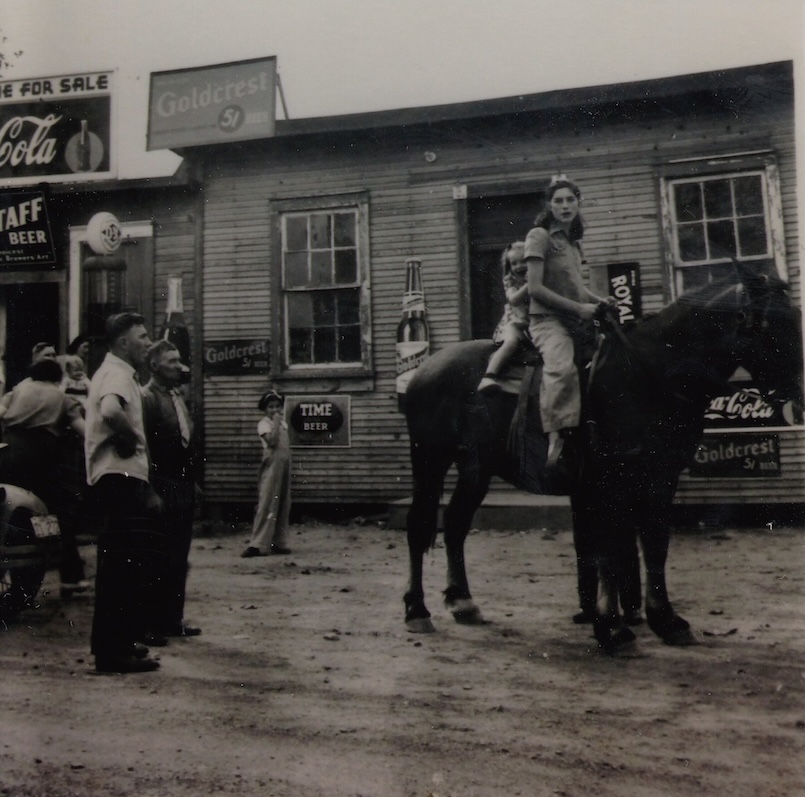
By the following December, four more homes dotted the countryside, and more families soon followed. Within 10 years, 15 families populated the countryside of rural Pulaski and Perry Counties. They raised grapes, established a Catholic church, and slowly adjusted to the pioneer lifestyle.
Life within Little Italy changed when Prohibition began in 1919; the Eighteenth Amendment threatened the colony’s chief product, alcohol. Though it likely appeared detrimental to the settlement’s prosperity at the time, this law advanced Little Italy’s prominence in Arkansas history. Before and during Prohibition, the Italian winemakers produced thousands of gallons of alcohol yearly.
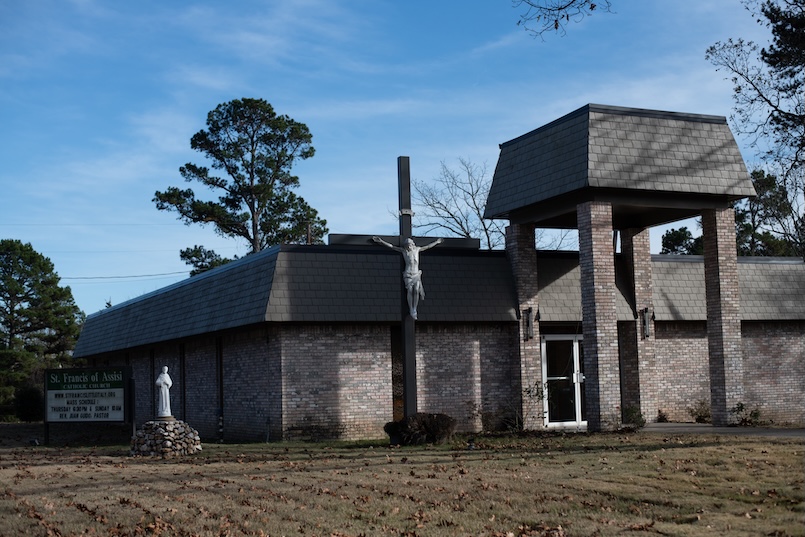
HWY 300 to experience the unincorporated community of Little Italy. The original St. Francis of Assisi Catholic Church
was established in 1922.
During Prohibition, Little Italy’s winemakers provided the state’s most populated region with a reliable [safe] source of alcohol. The settlement became a popular destination for many of the state’s most powerful politicians who secretly imbibed the wine or cognac.
The wine industry dwindled in the 1940s and 1950s, sending the younger generation to seek jobs elsewhere. By the 1970s, all of the original adult settlers were deceased, signaling the return of their children to reclaim familial homes in retirement. More than a century after it was founded, many descendants of the original families continue to live in Little Italy.