
01 Dec 2025 Petit Jean: The place for partnerships
By Donna Lampkin Stephens
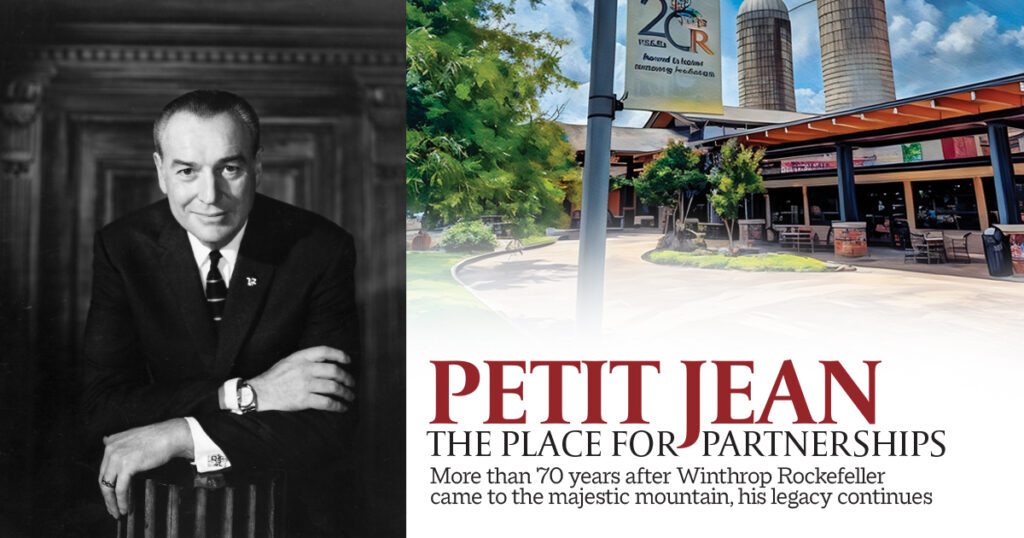
More than 70 years after Winthrop Rockefeller came to Petit Jean Mountain, his legacy continues serving the adopted state he loved through the institute that bears his name.
According to rockefellerinstitute.org, Rockefeller, whose 1966 election as the first Republican governor of Arkansas since Reconstruction marked one of the state’s turning points politically, hosted scores of conferences and meetings at his mountaintop in the spirit of solving problems. The Rockefeller Institute continues that tradition today, using the “Rockefeller Ethic” — collaborative problem solving, respectful dialogue and diversity of opinion.
Julia Dossett Morgan, chief advancement officer, said that sort of problem solving was natural for Rockefeller.
“He got that from his parents, but he was also a man who liked to be with other people,” she said. “He was not comfortable staying up above folks. He liked to work and learn with his hands. He’d served in World War II; he’d worked in the oil fields. It was a continuation of the way he’d been living his life.”
She said when Rockefeller, a grandson of Standard Oil co-founder John D. Rockefeller, moved to Arkansas in 1953, he was looking for a place to begin a new chapter.
“He bought land and started Winrock Farms,” she said. “He found a lot of success, and he enjoyed the cattle work, but as he was building Winrock Farms, with the vet offices and cattle pens, he was also building a conference center with meeting rooms. He was already realizing we had a lot of potential in the state that had been stymied. We had been losing population; we hadn’t transitioned out of the agrarian economy.
“But he saw the natural resources and the wonderful people who lived here, and he said, ‘I can make this better, but I’m not going to do it alone.’”
According to the website, the Institute continues Rockefeller’s belief that new solutions are needed to tackle old problems.
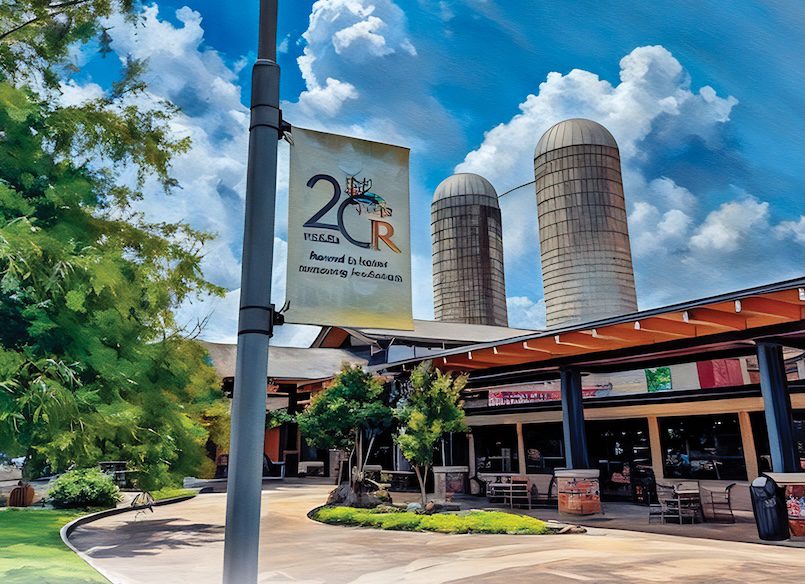
Austin DuVall, marketing and communications manager, said it had hosted 117 facilitations, totaling more than 4,000 hours/168 days of planning, in-room work and post-work since 2016, when “we really began to focus on building our own facilitative method.”
Program topics have included rural health care, rural workforce development, civic engagement, agricultural water usage and preservation, rural community development, recidivism, Arkansas education policy, food deserts and food insecurity, and health equity in Arkansas, as well as others encouraging Arkansas medical students to practice in rural areas, an annual 40 under 40 forum, university research collaborative with UAMS and UA-Fayetteville, and a public dialogue series with the Clinton School of Public Service covering a wide range of topics.
Among a long list of organizations that have been part of the facilitations are the Dicamba Task Force, AmeriCorps, Simmons Bank, Arkansas Research Alliance, UAMS Department of Pediatrics and Fay W. Boozman College of Public Health, Conway Area Chamber of Commerce, Arkansas Food Bank, Conway Corp, Conway Public Schools, Little Rock Water Reclamation Authority and Gov. Asa Hutchinson’s Food Desert Working Group.
Carder Hawkins joined the Institute in 2022 as chief strategy officer. A political science graduate of the University of Central Arkansas, he spent 20 years in state government and saw first-hand Arkansas’s transformation from a primarily blue to primarily red state.
“When I had the opportunity to come here, what really struck me about this place was how Winthrop wanted to help people,” Hawkins said. “He had a legacy as a convener to help others. He was a man of great wealth, but what drew a lot of people to him was he had a huge heart to help people, whether on Petit Jean Mountain or the broader state. People still talk about that.”
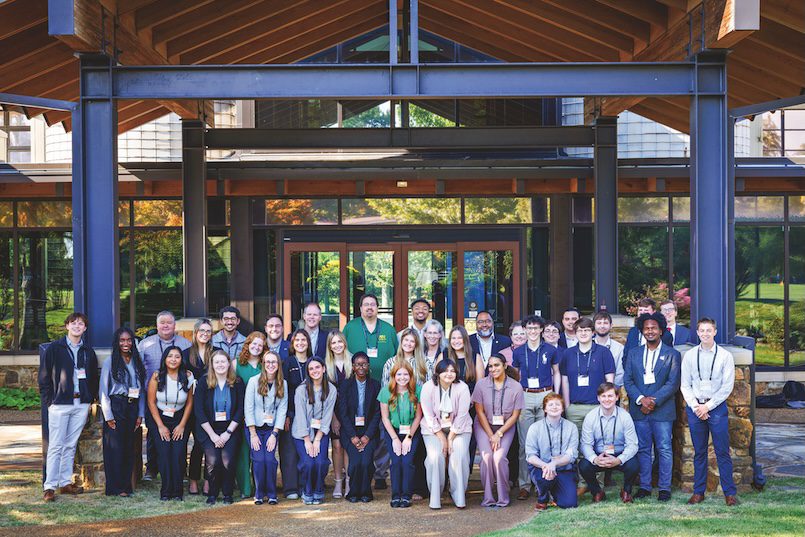
Morgan said the Rockefeller Ethic ensures that “everyone can be heard, and there is diversity of opinion with different lived experiences.”
“We don’t want academics telling the farmer how to do everything,” she said, as an example. “We mix all those together in a place where people can be themselves and disagree without being disagreeable, and we have seen over and over again how we can create transformational change.”
Hawkins said that was part of what drew him to the mountain.
“A real opportunity to get people from all sides to come together to solve problems,” he said. “It seems like every day there’s an article in the newspaper about things that are happening to address problems that contain nuggets of output and data that were part of our programs. We can’t point to them directly, but we know it’s there, conversations we had here with program participants that were feeders to what’s going on now, and that’s rewarding.”
As examples, he pointed to the governor releasing money to help food pantries or encouraging coordination of local produce between farmers and schools.
“There are all kinds of opportunities to convene with folks to identify what they can work on together,” he said. “That’s the power. We identify what they’re never going to agree on, get that out of the way, then hone in on what they do have in common, what they can work on together, and it goes from there.
“It seems like common sense, but we need to be very intentional and let them have that conversation to be able to have others that will move the needle.”
For more information, visit rockefellerinstitute.org.
- The comeback coach - June 14, 2026
- From tragedy to purpose - May 10, 2026
- The Wednesday Table - March 15, 2026