
14 Jun 2026 Moments that made men
By Vivian Lawson Hogue
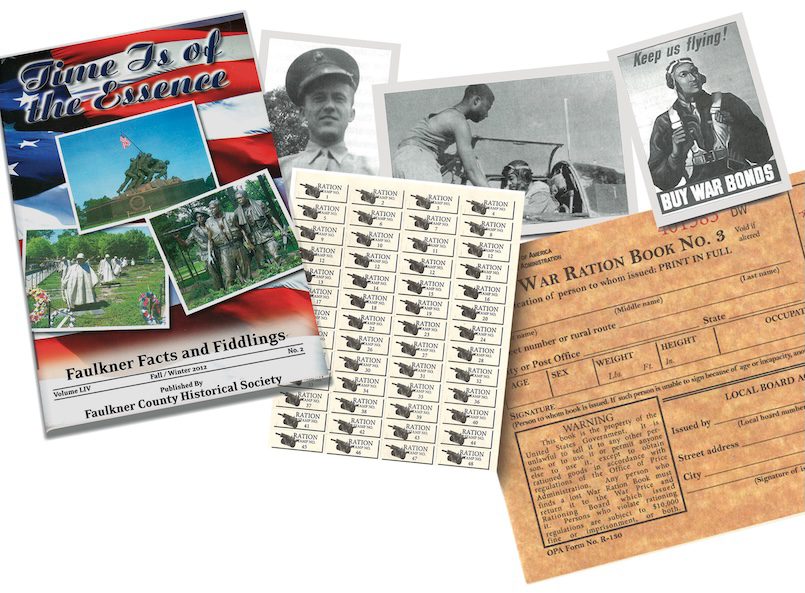
The nature of ideas is that they come and go. Some work; some don’t but still have value. While serving as managing editor of the Faulkner Facts and Fiddlings, the semiannual journal of the Faulkner County Historical Society, I had one of those ideas that worked in a special 2012 Veterans Day edition entitled “Time is of the Essence.” Assisted by Nancy Mitchell in obtaining and conducting interviews with veteran men and women of Faulkner County, we gained a trove of inspiring stories. My introduction to the journal explained its purpose. The personal experiences of these soldiers will demonstrate overwhelming public patriotism that we haven’t seen since. In this 501 LIFE issue, they easily represent that attribute.
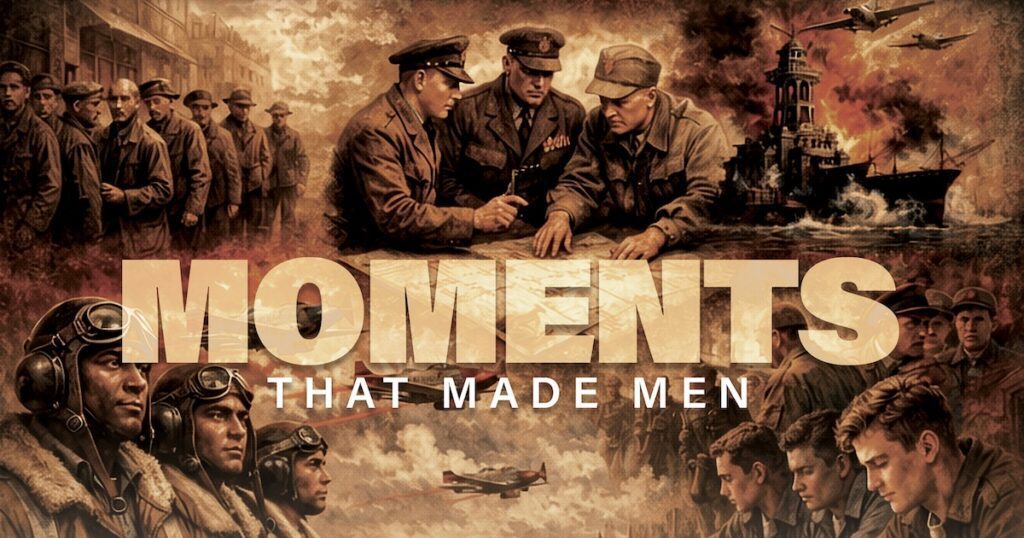
My generation has now found its place in time where it can see the United States’ cultural differences between the World War II era and those of the present. Having been born in 1943 to parents older than those of my peers, I was privileged to have observed “hard times” and “heart times.”
During WWII, we learned patriotism in grade school and at home. We recited the Pledge of Allegiance to our fought-and-died-for flag, one of which hung in the classroom. We learned that not all countries had freedom or elected leaders and that rulers of some countries killed and enslaved their own people. We bought war bonds and war stamps. With reduced family incomes and perhaps husbands at war, women sewed and knitted for their families and for the troops. We were rationed sugar, milk, eggs, fabrics, gasoline and tires so they could be used to create items for soldiers to better defend themselves and us. At war’s end in 1945, even local women, usually widows, began renting rooms in their homes to returning soldiers until their finances improved. It was a time of sacrifices in small and great degrees.
Five years later, the Korean “conflict” brought us to war again. Then in 1961, high school seniors put down diplomas and picked up maps to locate the Bay of Pigs. The 1962 Cuban Missile Crisis followed, and the dogs of nuclear war growled and bared their teeth. On a November day in 1963, President [John F.] Kennedy was assassinated. We barely regained our bearings when Vietnam made us pick up maps again. World War I had not been the hoped-for “war to end all wars” after all.
The following excerpts from full articles in the journal cannot possibly tell the entire self-told stories, but they are significant in some or many ways.
Homer Hoffman. “In 1939, the Depression was still going strong with few jobs anywhere, so I thought about enlisting in the military. Papa tried to talk me out of it.” However, Homer was sworn in as a Marine and headed for San Diego, CA. He said, “About this time, Japan and the U.S. were having some small problems.” Homer’s 6th Division was sent to Midway Island, while others went to Wake Island. “The islands were all sand except for a few scrubby bushes. The gooney birds (albatrosses) were there by the millions. They would lay eggs in the sand and be in the way. They hindered aircraft from taking off. There was another kind of bird called a “moaning bird” that lived in holes in the ground.
We were there until early December 1941. On the morning of Dec. 7, the sergeant picked me up from guard duty, saying Japan had bombed Pearl Harbor. About sundown, they began shelling us with the big guns on warships. It was quite a while before we could get replacements from the States.”
Johnnie Walter. “I was at home on the farm and was getting the cows up to milk when I heard about Pearl Harbor. I wondered how many of us boys in the family would have to go into the service.” Eventually, Johnnie and brothers Diederich and Edward were drafted. Johnnie stated that on the farm it was rough without the older boys. His dad helped build the Army camps at Camp Robinson and in Missouri. The three boys were shipped to Camp Howze in Gainesville, Texas, then Johnnie went to Camp Claiborne in Louisiana. In August of 1944, his platoon landed on Normandy Beach, six months after the Normandy Invasion. He was wounded in battle, spending six months in hospitals for his leg wound and frostbite. After returning to Conway, he worked for Simon’s Bakery for 34 years.
Airmen from Tuskegee. The Tuskegee Airmen name refers to a select group of African Americans who were trained at the Division of Aeronautics of Tuskegee Institute in Tuskegee, Alabama. The pilots earned the nickname Red Tail Angels from other bomber pilots. In 2011, Airman Milton Pitts Crenshaw, one of the last five pilots and in his 90s, spoke at the University of Central Arkansas and surrounding schools.
Major William T. Mattison, a native of Conway, became a Tuskegee airman in 1942. He was the operations officer of the 100th Fighter Squadron, a leader of the 302nd Squadron and a member of the 332nd Fighter group. He reportedly shot down 28 enemy planes. After downing four Nazi planes, he was awarded the Distinguished Flying Cross. Mattison became ROTC director at Howard University in Washington, D.C. He died in a plane crash in Ohio in 1951 while en route to an older brother’s funeral in Little Rock. He is buried at Arlington Cemetery.
These men were true Men of the Moment when their youth and inexperience seemed only a moment before. Jesus himself spoke of continual “wars and rumors of war” to come. The Bible’s Book of Revelation contains the horrendous last war. Civil War U.S. President Abraham Lincoln warned, “America will never be destroyed from the outside. If we falter and lose our freedoms, it will be because we destroyed ourselves.”
Lincoln, of all people, knew that truth.
- Moments that made men - June 14, 2026
- The smile at the front door - May 10, 2026
- Defining my best life - April 4, 2026