
05 Sep 2025 A great night with John Boy
By Donna Lampkin Stephens
More than 50 years ago, the television series “The Waltons” made Richard Thomas an icon, and the actor will bring his next iconic role to the 501 in mid-September.
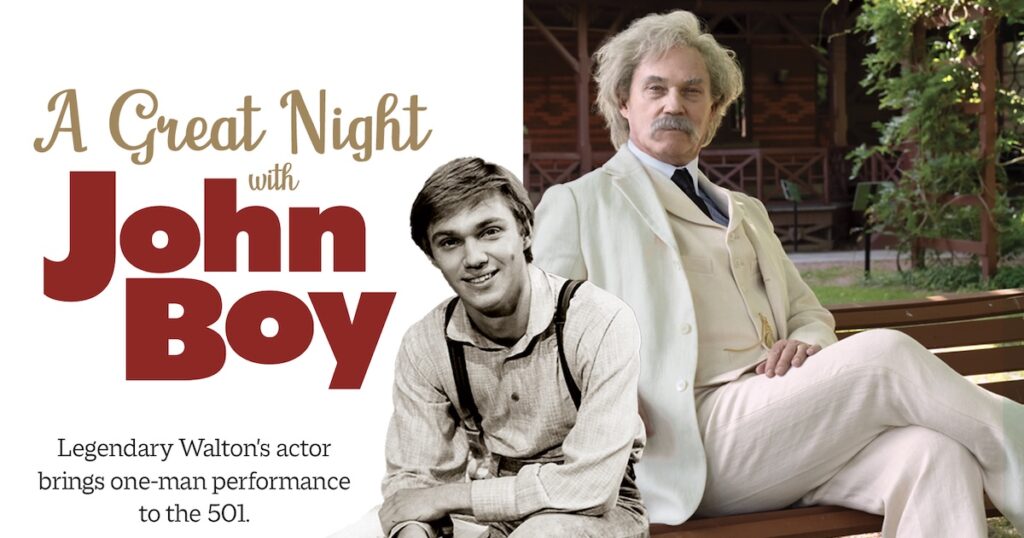
Thomas, 74, who became a global name with his portrayal of John-Boy Walton during the long-running series, stars in a new production of Hal Holbrook’s one-man show “Mark Twain Tonight!” Holbrook, who died at 95 in 2021, wrote the play and performed various versions of it for more than six decades on Broadway, on tour and on television.
The Little Rock stop, at Robinson Center on Sept. 12-14, is the fourth in the tour, which premiered Aug. 12 in Hartford, Conn.
Representatives of Holbrook’s estate reached out to Thomas, who was then touring as Atticus Finch in Aaron Sorkin’s “To Kill a Mockingbird,” with the idea. The actor, who won an Emmy and received multiple Golden Globe Award nominations for his “Waltons” role, is the only actor authorized to perform the play, according to TheaterWorks.
“We think Hal would approve,” Thomas said during a phone interview with 501 LIFE a few days before the play opened in Hartford. “We didn’t work together, but we knew each other. We were very cordial. Our paths crossed often; we were mutual admirers. “It feels like his blessing is implicit. It’s a great thing to be invited to do.”
His “Mockingbird” run ended in June 2024. He had a couple of weeks off before going into rehearsals for “Our Town” on Broadway, which closed at the end of January.
“As soon as it looked like ‘Mark Twain Tonight!’ was moving from a good idea to reality, I started to do my research,” Thomas said. “That’s when I started to really learn the pieces. Hal had decades to do this. I wanted to start with a very firm text that was very set before I start branching out.”
Like generations of Americans, Thomas read Twain as a student, and he appreciated the aphorisms and serious themes beneath the humor. During the “Mockingbird” tour, he reread “Huckleberry Finn” and “Tom Sawyer” as a way to immerse himself into rural Southern culture.
“That opened Twain for me again,” he said. “It was the first time I’d read (the two classics) since I was in school. It was wonderful to read them as an adult. Those were the roots of all the things that came to fruition in Twain as an adult.”
Holbrook’s script is based on the letters of Samuel Clemens and his writings under his pen name, Mark Twain. He performed the role more than 2,000 times before retiring at 92 in 2017.
“It was his project,” Thomas said. “He started doing short versions of it here and there, then it gradually developed into a fuller performance event, and he started to tour it around. There’s a body of texts he would use over the years to restructure the evening for different parts of the country or to tell a different story.”
Thomas doesn’t have that luxury — yet.
“I have to internalize a script, and once that’s done, I can do some of the shuffling of the deck like he did,” he said. “(Holbrook) blended things and added things and took things out and created different versions. But he very much wrote and created it, and it’s a real effort on his part.”
Thomas said he didn’t really like the word “relevant,” but it’s an apt description of Twain decades after his death.
“The mark of a classic is it’s interrogated and passes the interrogation test from generation to generation, and you could say Twain is always relevant,” he said. “He personifies in so many ways the American character and all the contradictions in the American character. He was a highly complex personality. How he evolved as a man in terms of social awareness and the causes he espoused, how he evolved socially, mirrors the evolution of the country’s perception and efforts. So much of what happens to him is what we do.”
He said the characters Huck and Tom are both different aspects of Twain himself.
“In Huck, you have the awakening of a social conscience, and that’s true of Twain, Huck Finn and the country at large,” Thomas said. “(Twain) was highly critical of great wealth and monopolies and corporations, and he had a mistrust of power and wealth, yet he spent his whole life trying be the richest man he could.
There’s a tension between egalitarianism and economics and high capitalism. And because Twain was absolutely out there with all his contradictions — he never tried to present a clean, homogenized version of himself — you get the man, and (the play) reflects this.
“He’s quintessentially American. Hemingway said ‘Huckleberry Finn’ was the beginning of American literature. His humor, the language, is highly skilled and extremely well-crafted, but the American voice was his. He made literature of the dialects he grew up with. It’s his language.”
Another thing that keeps Twain germane is that he was an equal-opportunity offender.
“There’s always this pushback from the right and from the left, which I think is just delicious and wonderful,” Thomas said. “He’s very different from the way we’re funny now. There’s much more wit, much more use of language, much more deadpan underlying the humor. “He was never anyone’s nice old uncle telling stories. There was always provocation, and that’s exciting.”
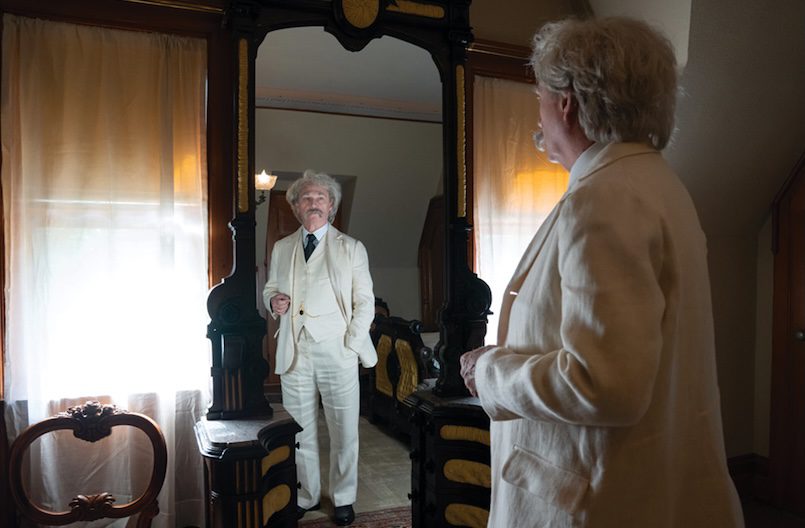
The play features Twain at 70. In press photos, Thomas nails the look. “I wanted a slightly more rumpled and older look,” he said. “The only advantage I have over Hal is that he started doing it at 30, and I’m past the age Twain was. I’m living in older bones while I’m doing it.”
Hartford, home of the Mark Twain House and Museum, is well-suited for the tour’s premiere.
“It’s a wonderful place to begin because he was probably happiest when he had his home here (1874-1891),” Thomas said. “I’ve worked in Hartford a lot and been to the Mark Twain House a lot.”
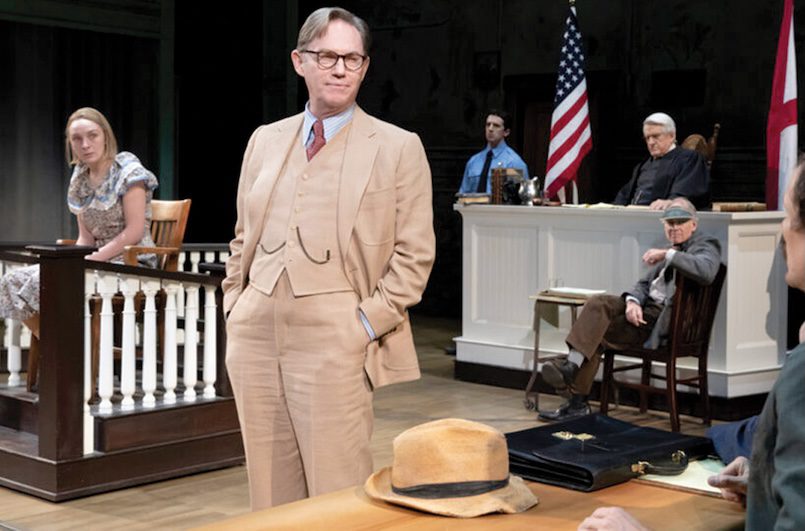
He starred in another solo performance based on the letters and early writings of Tennessee Williams, “A Distant Country Called Youth,” in a three-night run in Key West in March, but the Twain show is different. “This is a monodrama, a one-person performance piece about a performance piece,” he said in an interview during technical rehearsals in Hartford. “It’s Twain doing what Twain did on the road. As such, it’s far more intense. You’re alone; you don’t have scene partners except for the audience.
“It’s been a very different experience so far just to be in the room with the stage manager. You don’t have your colleagues in the play to bounce yourself off of. It’s a little lonely. I want to get in front of folks to see how it lands. The audience always teaches you so much.”
More than 50 years after “The Waltons” began its run, Thomas said the experience remains integral to him. “Every day of my life, people talk to me about it, and I love that,” he said. “It was a superb piece of television, beautifully written, beautifully acted, and it did a lot for me and for all of us. I have a lot of gratitude for it.”
He said the cast is “still like a family, still in touch. He is amazed at how many young people are aware of the show and his role.
“John-Boy was not your typical male protagonist at that time in America,” Thomas said. “He was a very sensitive young man with an artistic sensibility, which was a radical departure for long-form television at the time. So many people have told me, ‘I was one of those guys.’ They felt empowered. They felt very supported. I’m very proud of that.”
Little Rock performances of “Mark Twain Tonight!” are scheduled for 7:30 p.m. on Friday, Sept. 12; 2 p.m. and 7:30 p.m. on Saturday, Sept. 13; and 1 p.m. on Sunday, Sept. 14. Tickets are on sale at the Robinson Center Box Office, online at CelebrityAttractions.com or Ticketmaster.com, or by phone at 501.244.8800.
RICHARD RETURNS TO THE 501
While Richard Thomas has never brought a touring production to the 501 area before “Mark Twain Tonight!”, he starred in the 1977 motion picture “September 30, 1955.” The film depicts the impact of James Dean’s death on a group of Arkansas teenagers on that date. Much of the movie filmed on the University of Central Arkansas campus in Conway.
The feature was written and directed by the late James Bridges, who was a student at what was then Arkansas State Teachers College, now UCA, when Dean died in a car accident. This month marks the 70th anniversary of his death. Thomas played the lead, Jimmy J.
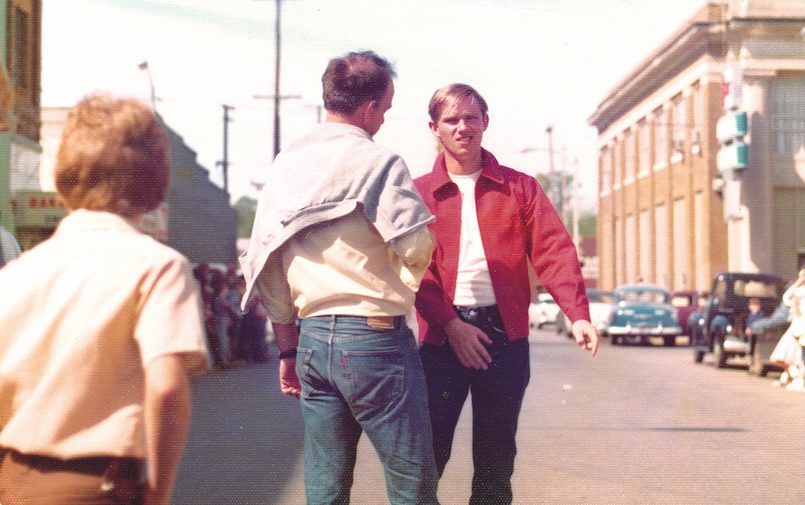
“I was a much younger man, in my 20s,” Thomas said, remembering the shoots on the UCA campus and at Toad Suck along the Arkansas River. “I was really completely absorbed in the movie we had to make. We’d come there with Jim Bridges. When you’re making a movie, you’re totally immersed in it, waking up at 5 a.m. Working 14-hour days, I wasn’t able to do much exploring, but of course these small towns and cities around the country carry such a cultural charge, you can’t help but absorb some of it.”
Bridges, whose film credits also include “The Paper Chase,” The China Syndrome,” and “Urban Cowboy,” was honored as a distinguished alum at UCA in 2012. His collection, housed in the UCA Archives, includes manuscripts, memorabilia and videos of his movies, including photographs of the film which brought Thomas to Conway 50 years ago. The Bridges/Larson Theatre in the Snow Fine Arts Center is named for Bridges and his partner, Jack Larson.

- Fits like a glove - December 2, 2025
- Petit Jean: The place for partnerships - December 1, 2025
- Youth of the Month: Emalee Jack Goforth and Bailey Fournier - November 4, 2025