

27 Oct 2025 State and Local Partners Unveil the Saline River Conservation and Recreation Plan
BENTON — State and local leaders gathered recently at the Saline County Career Technical Campus to celebrate the announcement of the Saline River Conservation and Recreation Plan, a five-year collaborative initiative designed to conserve one of Arkansas’ most biodiverse watersheds while expanding sustainable outdoor recreation opportunities.
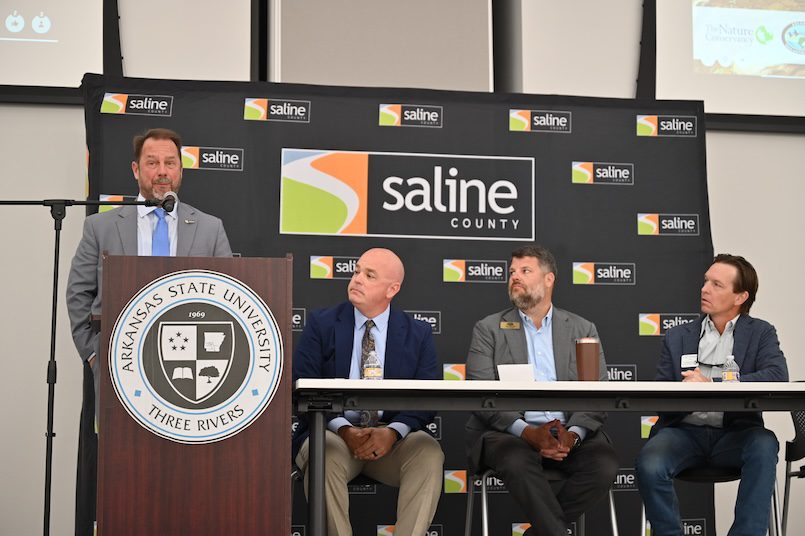
The plan outlines a shared vision for protecting the Upper Saline River and its four major tributaries—the North, Alum, Middle, and South Forks—through coordinated conservation, recreation and community development efforts. It represents a partnership among Saline County, the Arkansas Game and Fish Commission (AGFC), The Nature Conservancy (TNC), and the Arkansas Natural Heritage Commission (ANHC) and Arkansas Office of Outdoor Recreation (OOR) within the Arkansas Department of Parks, Heritage and Tourism (ADPHT).
“Anytime you are able to have a group of people coming together for a common cause such as enhancement and preservation of a resource like the Saline River you cannot help but have excitement,” said Judge Jeff Brumley, Saline County. “We’re so grateful to have so many of our friends from state agencies join local Saline County representatives and residents in pursuit of a shared goal and vision. Together, we want to make our river a true destination—somewhere families choose to visit and enjoy outdoor recreation. I look forward to gathering with this group of smart and passionate people as we continue to enhance our County, our State and our future.”
The Saline River and its surrounding watershed is home to 215 species of concern for conservation, including 22 species of freshwater mussels—the state’s most imperiled animal group—as well as 10 species of rare fish and numerous rare plants and animals. Within the project area, three Arkansas Natural Heritage Commission Natural Areas—Middle Fork Barrens, Alum Fork, and Goat’s Beard Bluff—collectively protect over 1,000 acres of glades, woodlands, and streamside habitats.
“The Saline River project embodies what we strive for at the Department of Parks, Heritage and Tourism—uniting conservation and recreation to protect Arkansas’ natural beauty while creating more ways for people to experience it,” said Shea Lewis, Secretary of the Arkansas Department of Parks, Heritage and Tourism. “Through partnerships like this, we’re ensuring that the Saline River and places like it remain vibrant, accessible, and cared for by generations to come.”
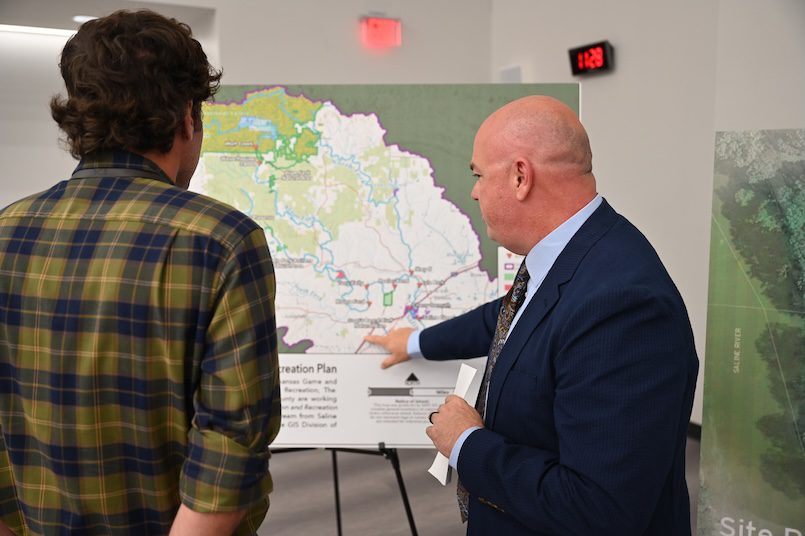
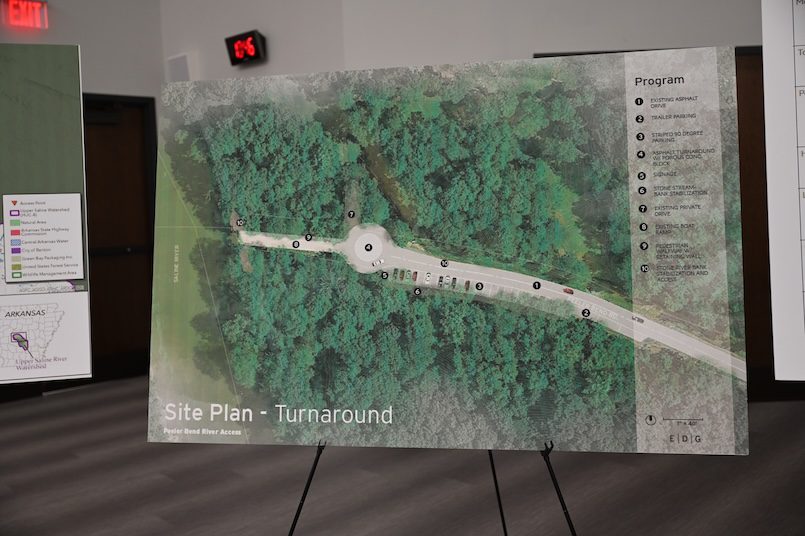
The plan envisions new or improved access points, signage, and safety measures along the Saline River Water Trail, exploration of a whitewater park in Benton, addition of measures to control erosion, and expansion of multi-use trails and public natural areas for hiking, fishing, and paddling. These improvements aim to strengthen local economies through nature-based tourism while ensuring the long-term health of the river system.
Doug Schoenrock, Director of the Arkansas Game and Fish Commission said, “Arkansas Game and Fish Commission is very pleased to be a partner in this precedent setting plan creation and implementation. We recognize this river as high importance for species and habitat conservation as well as outdoor recreation value. Addressing these issues in partnership planning represents the way forward for management of rivers throughout Arkansas.”
“The Nature Conservancy’s mission is to conserve the land and water on which all life depends,” said Roger Mangham, Arkansas State Director of The Nature Conservancy, “The Saline River is rich in biodiversity and offers significant ecological and recreational values. We are honored to partner with Saline County, Arkansas Game and Fish Commission and Arkansas Department of Parks Heritage and Tourism to conserve the upper Saline River for both people and nature.”
Event attendees included representatives from state and local government, conservation organizations, outdoor recreation groups, and community leaders. Following a press briefing and partner remarks, participants took part in an interactive working session to identify next steps in implementation.