
30 Sep 2025 Planting hope
By Judy Riley
When gardening merges with therapy and academics, it’s a big win for Central Arkansas. ACCESS Group, Inc. is a nationally recognized nonprofit dedicated to educating individuals with special needs from infancy through adulthood. The enterprise has two campuses in Little Rock and has been growing plants, both ornamentals and vegetables, for more than 30 years.
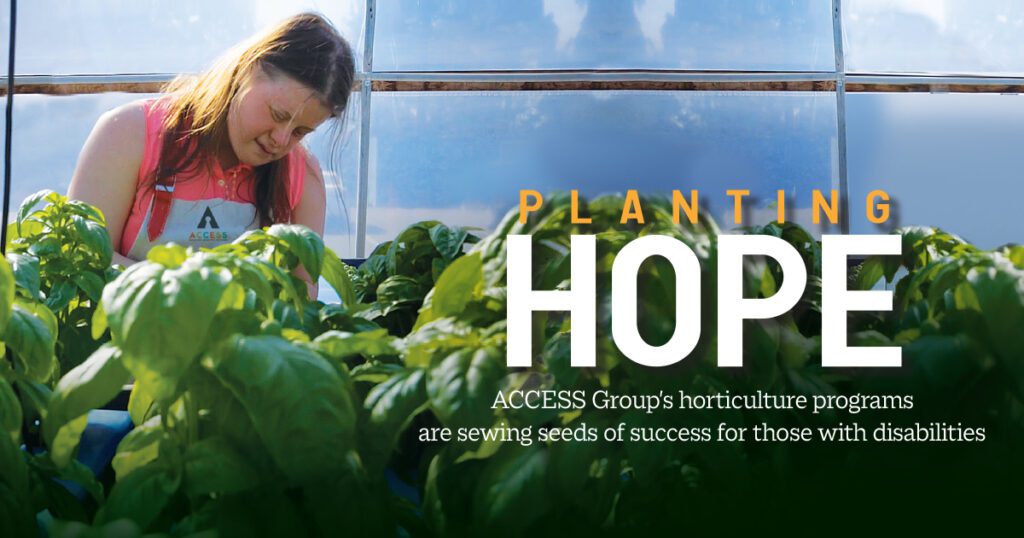
Students involved with ACCESS horticulture programs receive hands-on learning experiences in caring for, harvesting and marketing a variety of vegetable and bedding plants. Their newest endeavor is growing fresh basil hydroponically in a greenhouse on a Little Rock campus.
Executive Director Tammy Simmons, co-founder of ACCESS, grew up in a family that ran greenhouses. When she later became a speech therapist and began ACCESS in 1994, she recognized the opportunity to incorporate gardening into their teaching, using it as a hands-on way to build skills in areas like math, science and communication.
“As ACCESS expanded to serve not only children, but adolescents and adults, horticulture evolved into an even more essential part of our mission,” according to Krysten Levin, marketing and communications director. It’s also personal with Levin as her child has been a beneficiary. Opportunities for families, young adults and businesses are found by searching online for “Access Academy in Arkansas.”
The horticulture program has blossomed into one of the largest and most beloved annual plant sales in Central Arkansas. Vegetables, herbs and ornamentals are grown in the greenhouse to supply their early spring event. “What began as a therapeutic tool grew into a robust vocational training program, offering school-aged students and young adults opportunities to learn gardening, inventory management, harvesting and delivery, facilities and grounds care, and even customer service through public plant sales,” Levin said.
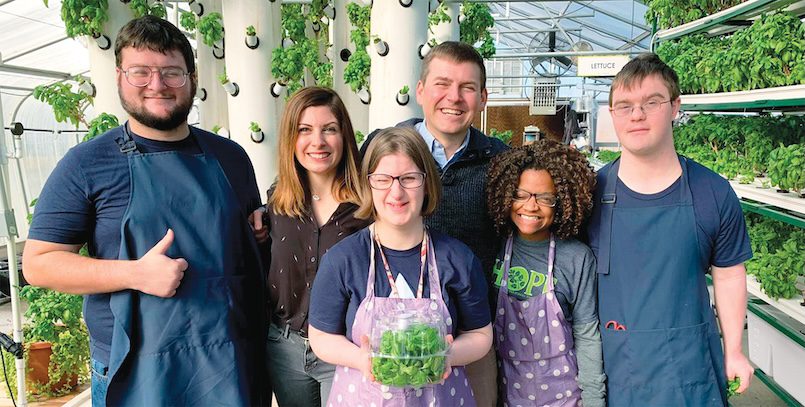
No longer content with just growing bedding plants, ACCESS built hydroponic herb gardens in its greenhouse in 2017. This concept is not a common farming practice in Arkansas. Roots of plants are constantly bathed in water that is combined with plant nutrients. According to reports from the National Institute of Health, this process is adaptable and appropriate for densely populated areas of the world where land is scarce. The process is complicated and needs proper management, but it allows for herbs to be grown quickly, above ground and in a controlled environment.
ACCESS Greenhouse Manager Trey Rosenbaum is just the person for the job. Growing up in 4-H, he learned the value of hard work and how to care for the land and all it grows. His interest was always in horticulture and landscaping, previously making a living at it. Those skills have equipped him for the manager position, but working with the kids and young adults has become his passion.
Rosenbaum claims three big benefits for his work. “I’ve always loved working with younger people,” he said. “They are full of energy and a desire to learn. And then, there is career advancement; I’ve always wanted to be a greenhouse manager. Lastly, I am passionate about vocational training. The ACCESS Garden allows for a lot of opportunities for vocational training for both school-age students and young adults.”
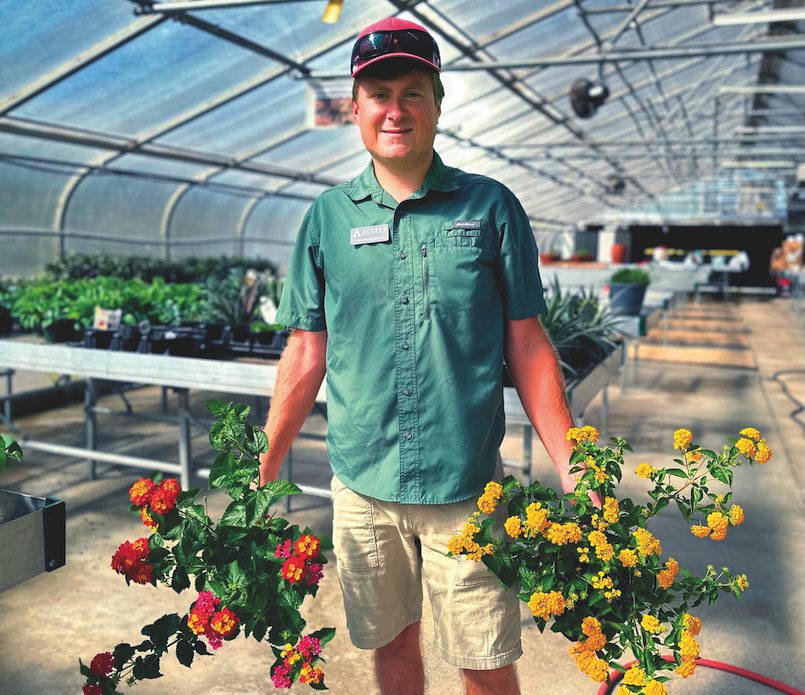
“Working with individuals with disabilities comes with its own unique set of challenges. It requires tailoring your words, expressions and actions to help better support them.” Rosenbaum credits his wife, an occupational therapist at ACCESS, for helping him overcome challenges in working with students. “They are often very expressive. When they have wins, successes, it is always a big celebration,” he said. “They are filled with a ton of joy and it is contagious. This place is such a happy place to be and it is what makes my work so rewarding.”
The herbs grown hydroponically were developed through collaborative local partnerships. Key supporters are Taziki’s owners Stephanie and Jake Keet. Stephanie first got involved in fundraisers as the Herbs Offering Personal Enrichment (HOPE) began through ACCESS in Arkansas. The HOPE project was first developed in Birmingham, Alabama, by Taziki’s founder. The Keets and their Taziki’s Mediterranean restaurants now purchase all their basil through the ACCESS gardens. They even hire ACCESS graduates to work in their restaurants.
It is rare when several folks with divergent interests get together for a common cause — and in this case, for all the right reasons. Simmons created the legacy; Levin’s child benefited and now she promotes the legacy; Rosenbaum found his passion; and the Keets found a meaningful way to give back. When that happens, the product is always better than what they could do alone. Central Arkansas is better for it!