

07 Sep 2025 Pet of the Month: Anderson the Bearded Dragon
By Lori Dunn
Everyone at Cabot Public Schools knows Anderson. He is loved by students and staff alike and is easily a contender for class favorite. Of course, he does stand out a bit due to his scales and appetite for bugs.

Anderson is a bearded dragon. He does not breathe fire like mythical creatures from folklore, but he is an interesting creature in his own right. His owner, Allyson Caruthers, is an educational interpreter for Cabot Schools. She is currently at the secondary level, grades 7-12, with a deaf student with whom she works. “Anderson is a class pet/self-advocacy tool for the student I work directly with,” she said. “However, he is not just for one student; he is for ALL students and staff in the building.”
This scaly reptile is Caruthers’ personal pet and is turning 3 this month. She adopted him when he was just a newly hatched dragon. Anderson goes to school with her on Monday and stays there all week. On the weekends and holidays, he goes home with her and is part of the family. Students and staff enjoy visiting him during the week, and he is even an incentive for good behavior.
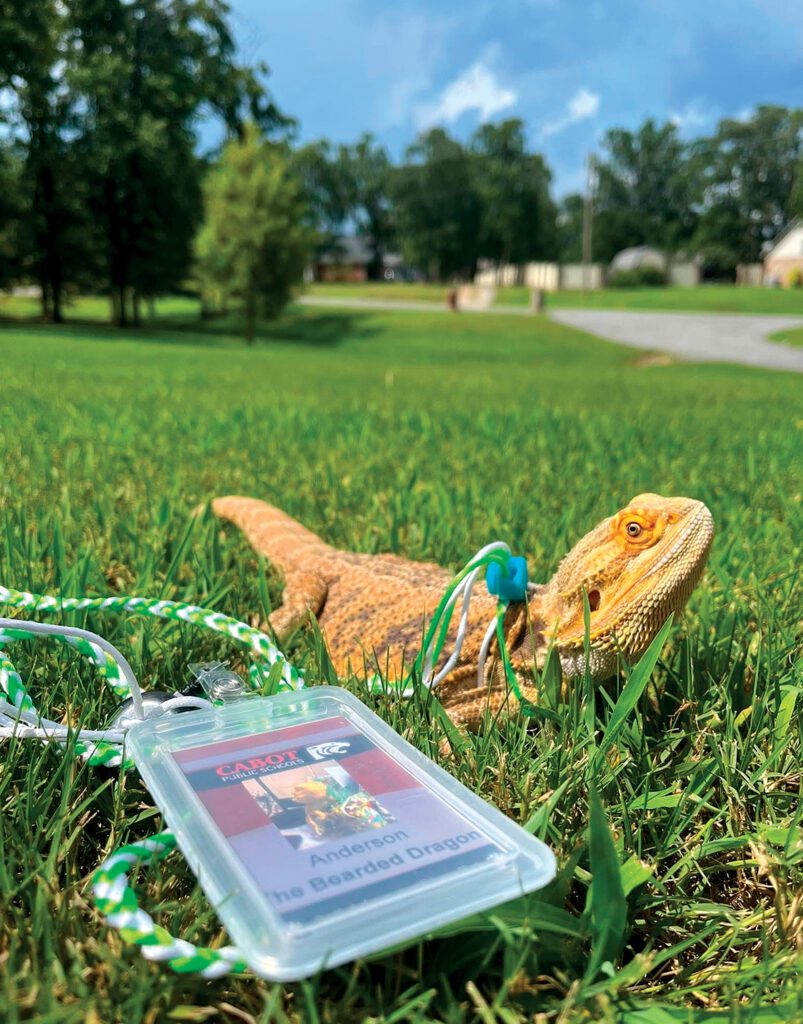
“Some students will come to my classroom at lunch to see him. He calms them down and they feel safe with him in a calming environment. Anderson is also a resource for other teachers. Our CBI [Community Based Instruction] teachers, our administration and other staff use Anderson as a reward for positive behavior, and some students can earn points to come see him, feed him, hold him and play with him,” Caruthers said.
The deaf student she works directly with teaches other small groups of students about Anderson sometimes. “This student made a PowerPoint when I first got Anderson, and he loves to teach others about him. Students and staff love to see Anderson when he is on our shoulder in the school building, outside on his leash or in my classroom,” she said. “I have had students come hunt me down before to ask if they can come into my classroom at lunch or before school to see Anderson. I have had a lot of staff asking me to bring him to their class for the day, or if they can come and get him for a while.”
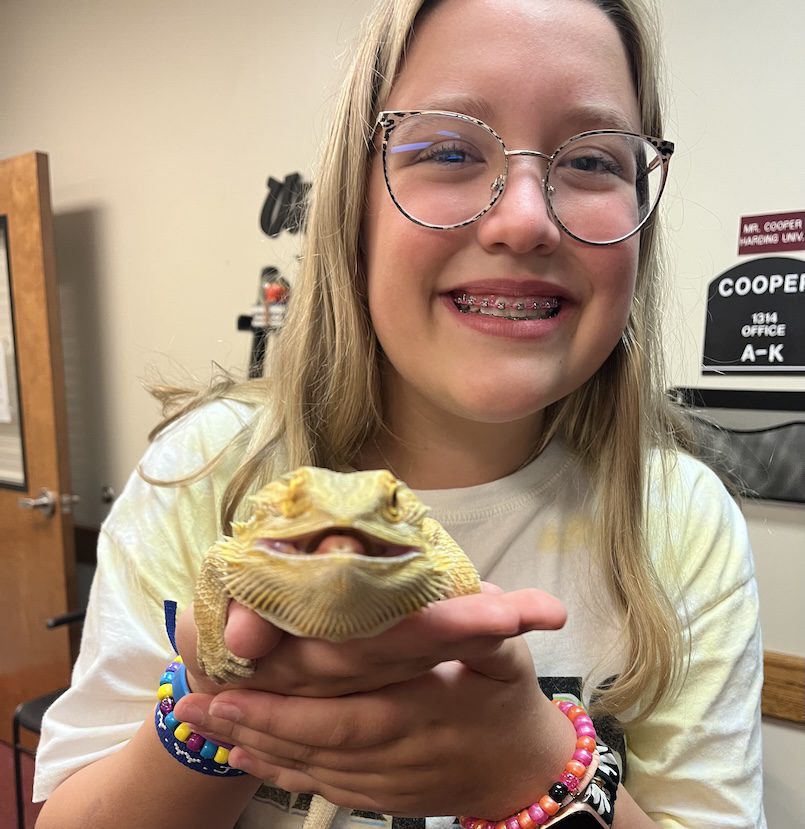
Bearded dragons are native to Australia. They are reptiles that live in a hot, dry climate and don’t like cold or high-humidity environments. Anderson prefers bright sunlight and temperatures between 85 to 100 degrees. He loves to bask in heat and light but does not mind temperatures in the 70s at night.
Bearded dragons eat a lot of vegetables, and they also eat insects several times a week. Anderson’s favorite bugs to munch on are Super worms and Dubai roaches. He is a lazy hunter and prefers to be hand-fed, Caruthers said. He also enjoys being outside in the sunlight and running around on the classroom floor. And just like other types of pets, Anderson also loves to snuggle. “He loves to snuggle on my chest with his head under my chin,” she said.
Bearded dragons are great pets but they are also high-maintenance. “I do feel like you need to do a lot of research about them and know about reptiles before getting one. I did research before I got Anderson, but I did not truly realize how much work they are,” Caruthers said.
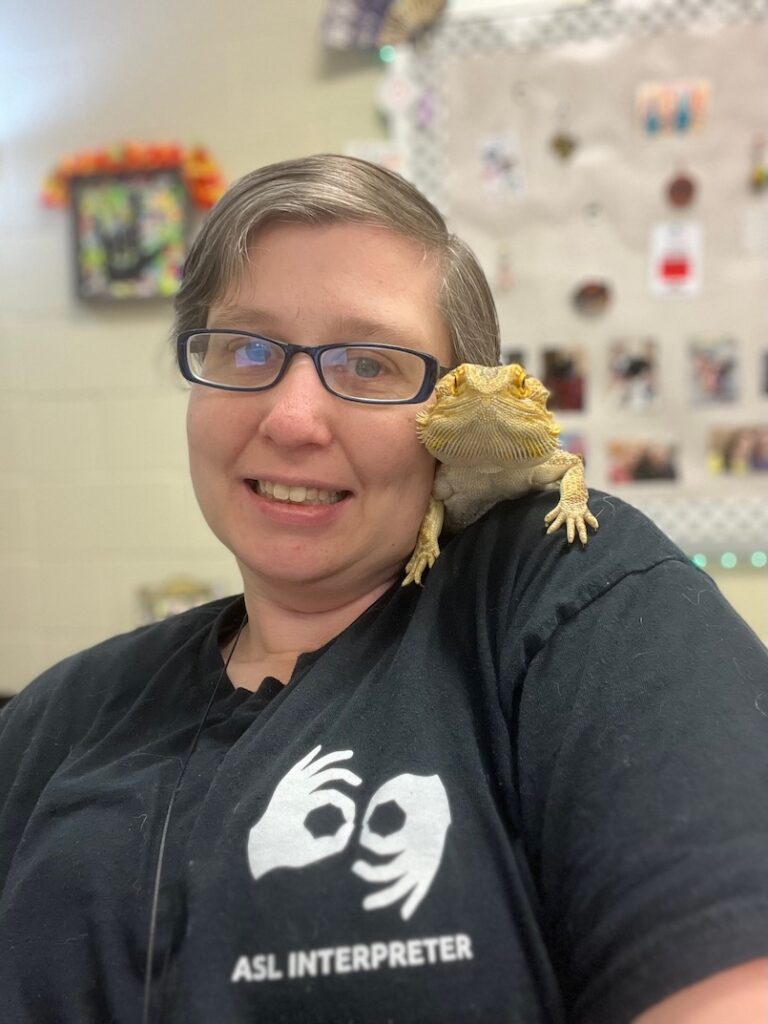
Anderson’s name is in honor of Dr. Glenn Anderson. He was Caruthers’ professor at the University of Arkansas-Little Rock, and is the first Black deaf man to earn his Ph.D. “I gave a few name choices and the student I work with picked the name as he liked Glenn’s story,” she said.
A Little Rock resident, Dr. Anderson is the author of a book titled “Still I Rise: The Enduring Legacy of Black Deaf Arkansans Before and After Integration.”
Caruthers admits she did not always have an interest in reptiles until she met a bearded dragon.
“Bearded dragons are the first reptile I’ve liked. I met one a few months before I got Anderson and I fell for them,” she said. Cabot’s students and teachers have also fallen for the 22 and one-half inches long, bug-eating creature who always earns an A+ for attitude and participation.