
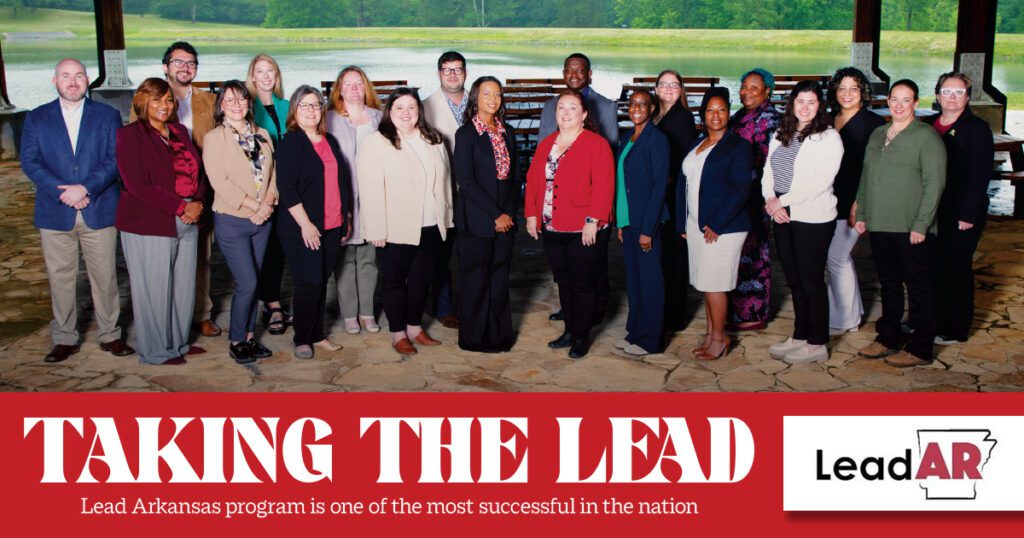
10 Aug 2025 Lead Arkansas program is one of the most successful in the nation
By Judy Riley
One of the best strategies for strengthening communities of any size is creating a leadership pipeline that continues through generations. That process has played out right here in Arkansas for more than 40 years. The Lead Arkansas (LeadAR) program received initial financial support from and was modeled after the W.K. Kellogg Foundation’s leadership design. Many states used the original seed money to start their programs, but few have succeeded the way Arkansas has. Since its founding in 1984, more than 500 Arkansans have graduated from LeadAR, conducted by the University of Arkansas System Division of Agriculture’s Cooperative Extension Service (UADA-CES). Graduates now lead businesses, communities and organizations across the state. Alumni include a wide array of professionals: educators, farmers, advocates, bankers, lawyers, state legislators, mayors and local government and community leaders.
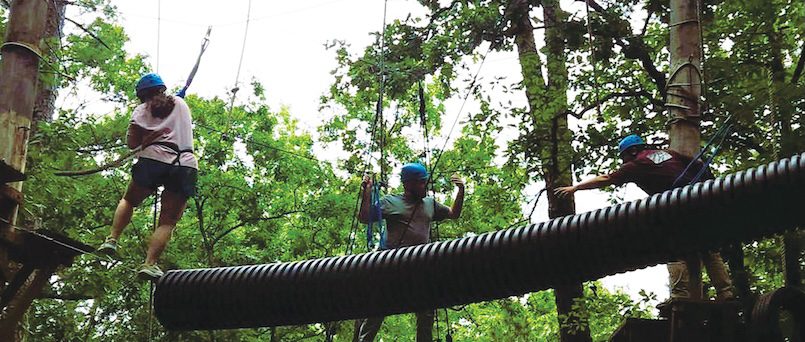
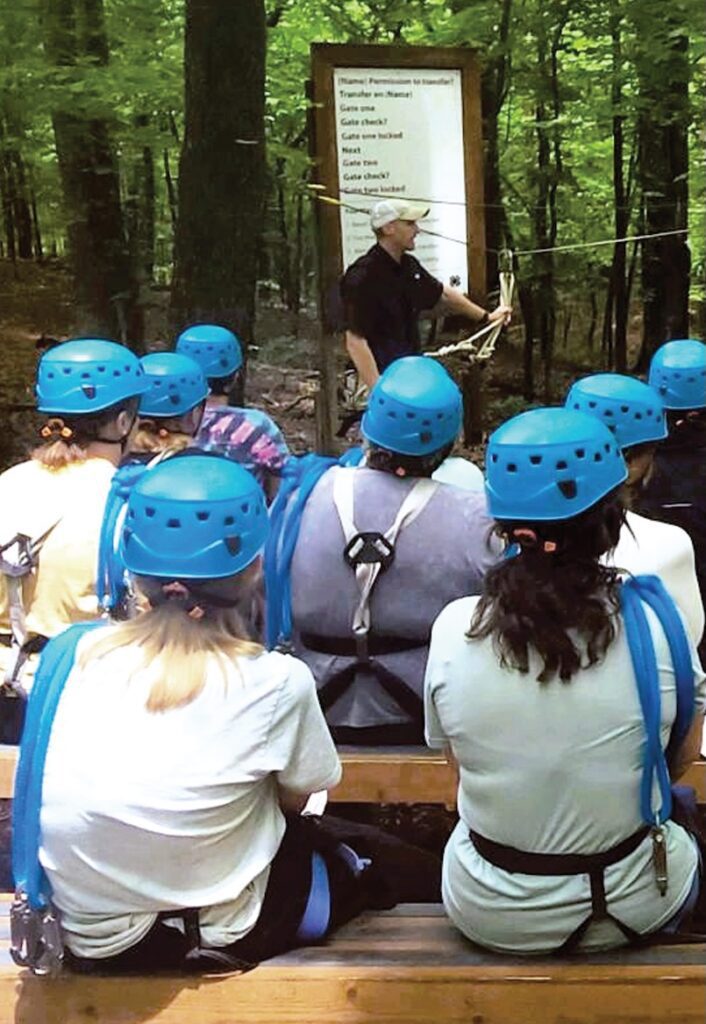
LeadAR is an 18-month intensive, hands-on program beginning with a three-day team-building and goal-setting seminar. The pristine and secluded space for the initial meeting is the C.A. Vines Arkansas 4-H Center in west Little Rock. Six two-day seminars with tours, guest speakers and interactive activities are then conducted around the state. Intermittent video conferencing continues throughout the process. Two aspects of LeadAR that are not necessarily included in most leadership training programs are a national study tour to Washington, D.C., to learn about the intricacies of the policy-making process and an international study tour that exposes them to global issues affecting the U.S. as well as Arkansas.
“LeadAR’s impact goes far beyond the 70-plus Arkansas counties where graduates of the program employ their enhanced leadership skills to serve and improve their communities. Their success stories continue through service as elected officials, in other key decision-making positions and on boards and committees at the local, state and national level. Their knowledge of the critical issues affecting communities and the available resources to resolve them make them valuable authorities to serve others,” said Dr. Joe Waldrum, a retired UADA professor who directed LeadAR for more than 20 years.
LeadAR brings together people from all areas of the state and prepares them to assume greater leadership responsibilities to benefit their communities. They learn to improve their ability to work with others and connect with people and resources that can help them make a difference. Class 21 has just begun their training. The group is as diverse in interests, vocations, locations and experience as all those were before it. Being accepted into the program is a competitive process of rigorous vetting through application forms, references and personal interviews. The complete current class list can be found at uaex.uada.edu/leader.
There is a synergy among class members that has become the unintended consequence of this training. When the first session begins, few have had any contact with any other class member. “By the time the 18 months is done, they not only learn from the experience, but they learn from each other. They become fast friends and their contacts continue to benefit them both personally and professionally. Watching this happen and being a part of orchestrating opportunities for classmates has been my great reward in this job,” said LeadAR Director Dr. Julie Robinson, professor of community, professional and economic development with UADA.
“Participating in LeadAR was truly transformational. It deepened my understanding of Arkansas’s most pressing challenges and inspired me to be a more effective leader in my community. I have since been elected to the Benton City Council in 2020 and got my doctorate in 2021,” Robin Freeman said. She was a part of Class 14 and currently serves as director of University of Arkansas Center for the Utilization of Rehabilitation Resources for Education Networking Training and Service.
“LeadAR is the most consequential thing I have ever done! I had just been elected mayor of my town, and the skills I learned and the contacts I made were invaluable to me and my ability to help my community. Not a day goes by that I don’t use something I learned in LeadAR. Not a week goes by that I don’t work with a local contact or friend I made in LeadAR. Not a month goes by that doesn’t find me in contact with a state or national leader that I met because of LeadAR. Not a year has gone by that I am not in contact with an international friend or leader that I met because of LeadAR. I know my community and I are better for having had the experience and I believe Arkansas is better too,” said Don Richardson, LeadAR Class 3 graduate from Clinton. Richardson went on from small-town mayor to federal Agriculture Department undersecretary during the 1990s to business entrepreneur with SolaRid, AR, LLC.
One of the hallmarks of this program is the continual giving back of participants. Each is required to take their experiences and contacts back to their community to complete a service project. Those have varied from running for an office, lobbying for legislation that affects their interests, creating festivals, to establishing a community library. Beyond that, they continue to give to their communities and to support the very program that encouraged them. When a seminar is held in their own community, LeadAR alums take charge of raising funds and securing presenters. “We would not be able to provide the rich experiences throughout the state without the assistance of our alums,” Robinson said.
More information about LeaadAR is available at uaex.uada.edu/leadar or by contacting [email protected].