
30 Sep 2025 Giving up was not an option
By Vivian Lawson Hogue
There was a time when people who felt sluggish after “winter blahs” went foraging for sassafras roots for a delightful tea to “thin their blood.” My dad could find them, but I never learned to recognize the leaves or limb silhouettes. He knew other potions and liniments that we thankfully missed. I did have to drink raw eggs once because I swallowed a handful of aspirins out of curiosity. No “upcoming results,” but I’ve always liked eggs in any form.
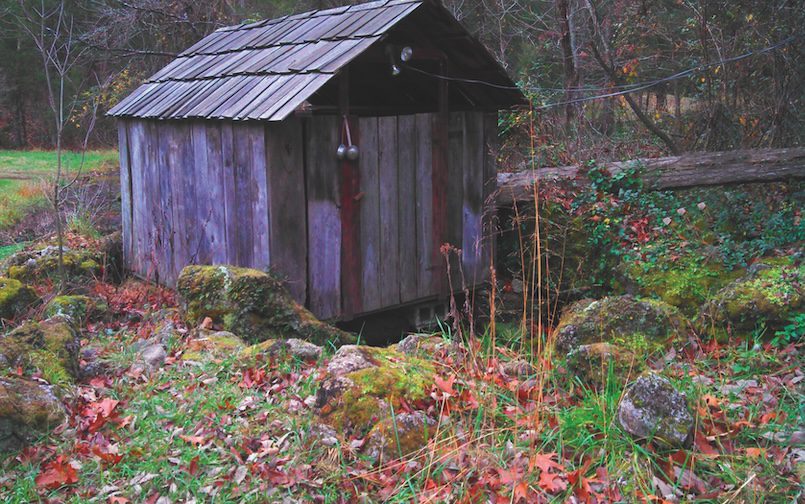
People knew nothing of bacteria or viruses. My grandmother kept one or two drinking dippers hanging on the springhouse and everyone drank from them without a care. The clear, sweet, magnesium-rich water was cold year-round. I recall a carload of people pulling up to the springhouse after driving through the woods, asking if they could have some as they had heard about it. They drank from the same dippers.
Dad said he never heard of smallpox cases because after years of testing, a vaccine became available in his youth. When I was in the first grade in 1946, the county nurse came and gave smallpox shots. Recipients would develop scars at the injection site after a few weeks. I never developed a scar, even after three shots, so it was assumed I had natural immunity.
There have been many vaccines since, and researchers test for 10 to 15 years to ensure safe, predictable, proven products. The one I remember personally was the one developed for polio after a decade of research and testing. It was in use in 1955, but only one year earlier, my Aunt Margaret contracted the disease. I spoke recently with her daughter, my cousin Gail Arnold Wood, about the circumstances the family experienced.
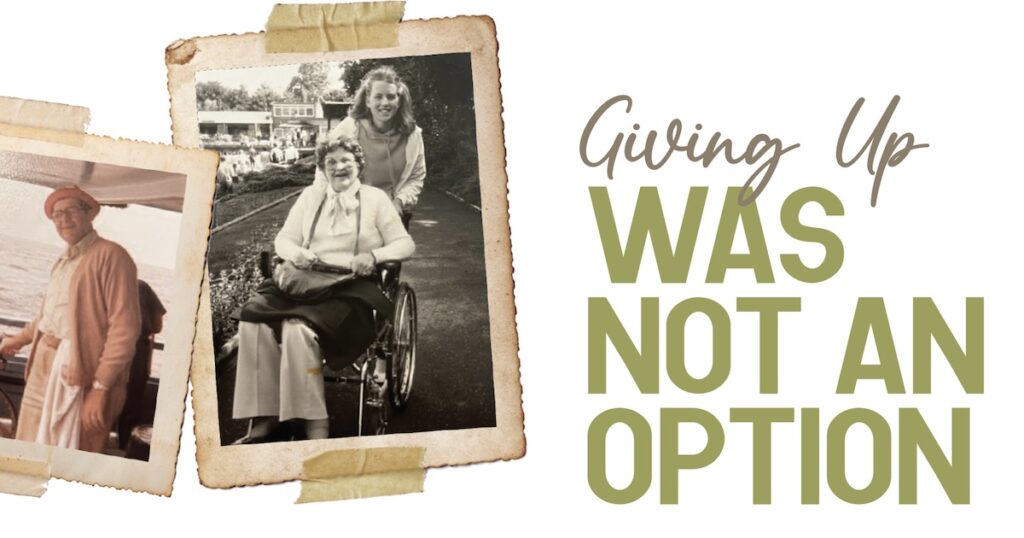
Aunt Margaret was a tall, lovely woman with a Georgia drawl as thick as molasses mixed with soft butter. She and Uncle Bill met at a dance during World War II and later enjoyed an enduring marriage. Their two young daughters were ages 5 and 15 months when their mother fell ill in 1954.
“We had been on a family trip, which ended at my grandmother’s home in Georgia before returning to Monticello, Arkansas,” Gail said. “One night, mother became sick and an ambulance was called to take her to Toccoa, a few miles away. At age 5, I don’t recall being upset as the implications didn’t register. She was then transferred to Atlanta and later to Warm Springs, Georgia, where President Roosevelt had received treatments as well. Dad worked for the government, so had to return to Arkansas for duties.
“Mother may have been in an iron lung for a time, but her paralysis was in lower extremities. She met others, including children, who were in much worse conditions. At Warm Springs, she learned many skills to help her function as normally as possible. She never wanted us to feel different or deprived because she was in a wheelchair. We didn’t, especially when she chaired the Girl Scout cookie sale, with boxes and boxes delivered to our house.
Once, as I was backing her off the ramp, I lost control and she fell out of her chair. She sent me inside to call a cab and to bring some books she could read to us while we waited for the driver. He finally arrived and lifted her into her chair, but until then, we sat in the yard – on Main Street – for a while.”
Aunt Margaret had been a high school English teacher, but there were surely questions about a return to the classroom. Uncle Bill determined that she would be encouraged to have a relatively normal household and life. As an engineer, he could build anything, even bridges during WWII! “He installed hand controls in our car and she passed her driver’s test,” Gail said. “About four years later, he drew house plans aimed at suiting her needs. Stove burners were waist high and open underneath so she could get close, and the oven was lowered. The commode sat on a thick slab of concrete, so it was wheelchair height. Her greatest tools were hinged tongs for reaching and a sliding board for transferring to or from her bed, the car or the bathtub.
“When I began seventh grade, the school superintendent and principal came to the house. They wanted mother to return to teach senior English and French. She accepted, and a door was created in the next-door junior high building to access her high school classroom.” Gail’s and Gloria’s assistance with logistics enabled her to work until retirement. After retiring, she and Uncle Bill traveled with other polio victims. After he died, she made several trips to Europe.
“She relished telling about a fellow teacher overhearing two boys talking as mother rolled by, with one saying, ‘That’s what you call hell on wheels,’” Gail added.
But I’ll wager he knew how to conjugate verbs!
- They found their ‘true grit’ - January 5, 2026
- And that’s what Christmas is really all about - December 2, 2025
- Giving thanks - November 4, 2025