
30 Sep 2025 From grief to gratitude
It’s been almost two years since Gre’Juana Dennis, affectionately known as G, noticed a lump in her breast. At the time, she attributed the mass to hormonal fluctuations, telling herself she’d keep an eye on it. In her early 40s, she was in the best shape of her life, with no family history of breast cancer or known genetic markers. She hadn’t even received her first mammogram yet.
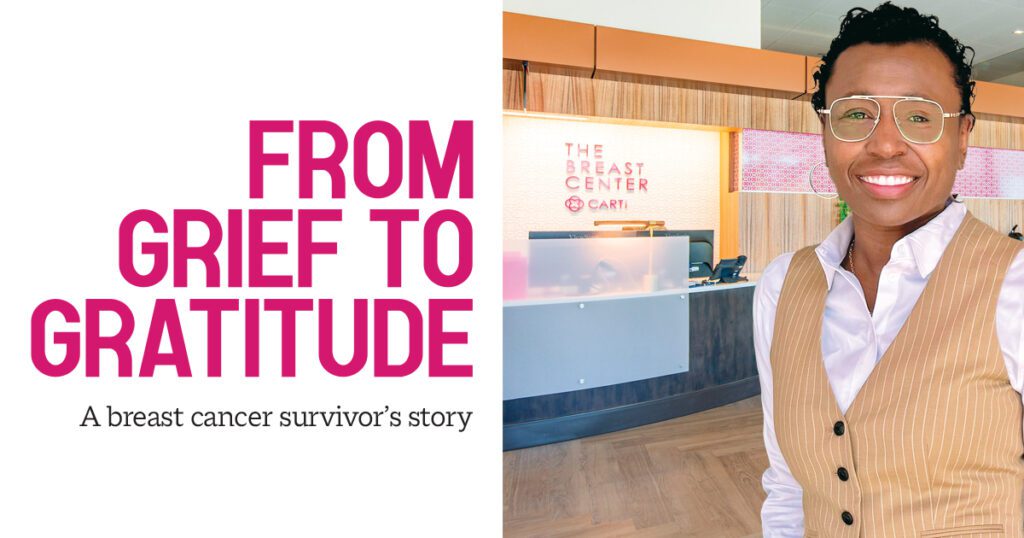
Then, while preparing for a work meeting a few weeks later, G felt the lump again. Concerned but reassured by friends that it was likely nothing, she was lucky to secure an appointment for a screening mammogram the very next day. Her life changed in an instant as she received the diagnosis — Stage 3 triple-negative breast cancer. The next steps happened “fast and furious” as she began what would become an intense, two-year journey.
Within days, G started an aggressive course of treatment at the recommendation of Sam Makhoul, M.D., CARTI’s medical director of clinical research. She underwent months of rigorous chemotherapy, culminating in a double-mastectomy performed by Yara Robertson, M.D., F.A.C.S., CARTI’s medical director of surgical oncology. Next up was radiation therapy and another round of chemotherapy, this time as part of a clinical trial at CARTI. Her final breast surgery now behind her, she’s currently completing a six-month course of chemotherapy pills.
With her medical team’s continued guidance, G has navigated to what she considers to be “a really great spot.” While her treatment journey has “completely disrupted” her life, she’s quick to admit that she was “grateful that I had the opportunity to do it.” She understands the fear women face upon receiving a breast cancer diagnosis. She felt it, too. She also experienced profound grief at the loss of her previous life, which she often calls “B.C.,” or before cancer.
A breast cancer diagnosis is out of a woman’s control. But what G notes they do have power over is their attitudes and how they mentally approach their treatment. A self-proclaimed high-functioning Type A personality, she understands it can be tempting to focus on life and work, hoping to “will the cancer away.” However, “the sooner you find it, the more proactive you can be,” she said.
Everyone processes their diagnoses differently. For G, she credits her family, friends and support system, including Dr. Robertson, a kidney cancer survivor, for giving her hope and showing her what it looks like to “get to the other side.” When discussing her experience, G often praises the local medical community. But she’s adamant in reminding other women that it’s up to them to give these doctors “the best chance to take care of you.” She doesn’t sugarcoat it: “Early detection is the key to survival.”