

14 Jun 2026 Fields of expertise
By Judy Riley
Dr. Deacue (Dee-que) Fields is the vice president for the Division of Agriculture for the University of Arkansas System (UA). In this role, Fields leads the Cooperative Extension Service and the Agricultural Experiment Stations, the two components of the UA Division of Agriculture (UADA). That includes 1,340 employees, with facilities located across the state, including a presence in all 75 counties.

Fields launched his first career venture at the tender age of 13. It was the 1980s. The highly transmissible brucellosis bacteria were infecting cattle, deer and other animals across the South. His dad was raising cattle specifically bred for competition at county fairs. The threat was so great that herds testing positive were destroyed. The younger Fields was devastated. Caring for livestock was his 4-H Club project, and he planned to compete with his prized cattle.
While such an experience would end most budding cattle careers, not so for Fields. He secured a $3,000 youth loan from the local Farm Service Agency to purchase six bred heifers. While still in high school, he sold show cattle to his peers. One of his steers was named Grand Champion at the Southern University State Fair in Louisiana. His attention to keeping records of profits and losses began.
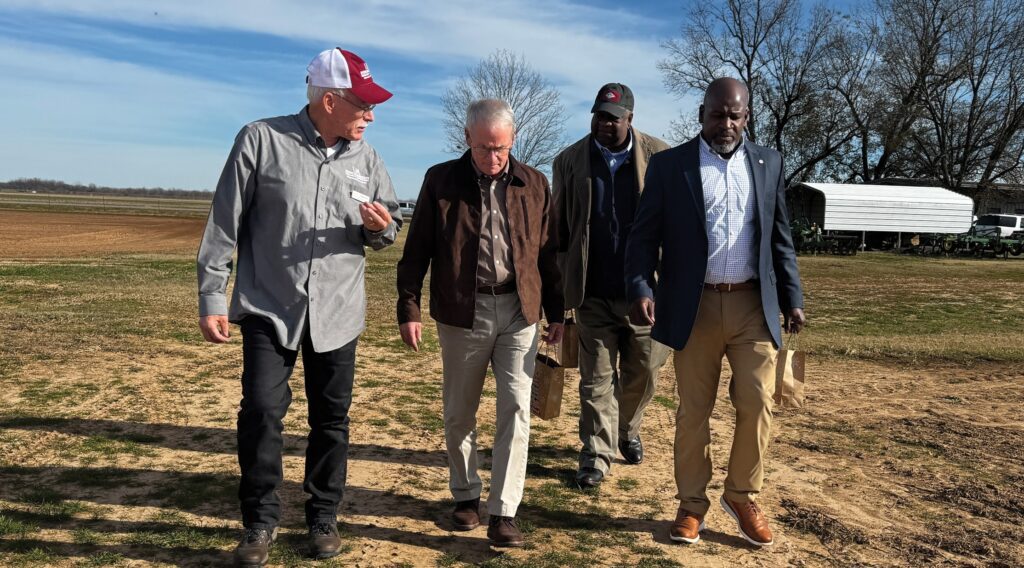
Getting an education was not an option in his family. Going to college, earning advanced degrees and helping others were in his DNA. His maternal grandfather raised nine children on a 300-acre cotton and soybean farm in Louisiana. All nine and their spouses earned college degrees, most in teaching professions. “I have 36 first cousins, all with at least one degree, many with two or three. When we all get together, there is at least one specialist in every field. It’s easy to get personal, yet well-researched advice from a trusted family member,” Fields said.
His degrees include a Bachelor of Science from Southern University in Baton Rouge, La., a Master of Science from the University of Missouri, and a PhD from Louisiana State University, all in agricultural economics.
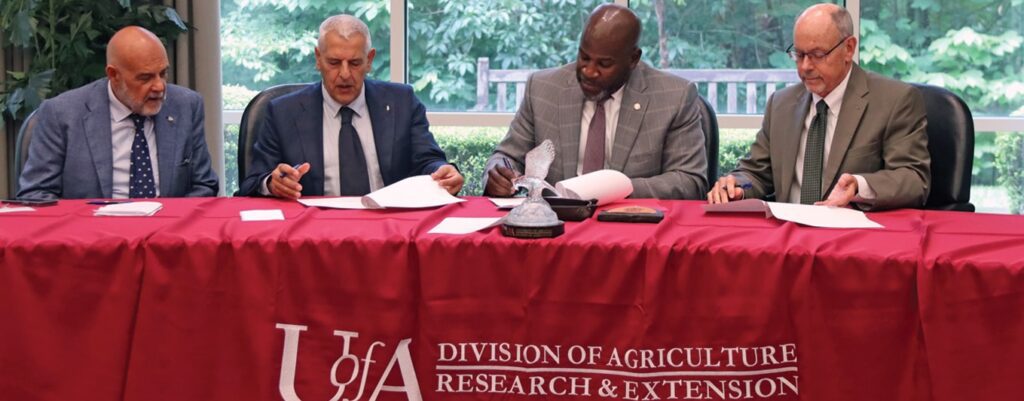
That led to a faculty position at Auburn University from 2002-2018, where he served as professor and chair of the Department of Agricultural Economics and Rural Sociology. In 2018, he became dean and vice president of academics for the Dale Bumpers College of Food and Life Sciences at the University of Arkansas.
These experiences uniquely qualify him to understand the needs of agriculture and equip his faculty to address them. Fields is a masterful recruiter. He admits to seeking highly qualified scientists like a coach recruiting a prized athlete.
“We’ve been able to staff our research and extension teams with some of the most sought-after individuals in higher education. They are experts in data analysis, plant diseases, animal and human nutrition, not to mention their ability to relate to farmers in the field and industry leaders in the food and fiber industries,” he said.
All that knowledge and the disseminating processes have never been more important than today. Farmers are facing steep challenges. Fields compares the current farming situation with that of the early 1980s. “The current crisis is suggesting a structural change similar to the 1980s versus the cyclical changes we have seen since. Farmers are currently experiencing consecutive years of net income reduction due to high input and low commodity prices, tight liquidity, record Chapter 12 bankruptcies and uncertain export markets,” he said. “Producers are currently challenged to decide what crops to plant given limited profitability and unstable global markets. Some traditional trading partners are now buying from other countries, and it will take time to capitalize on new emerging markets.
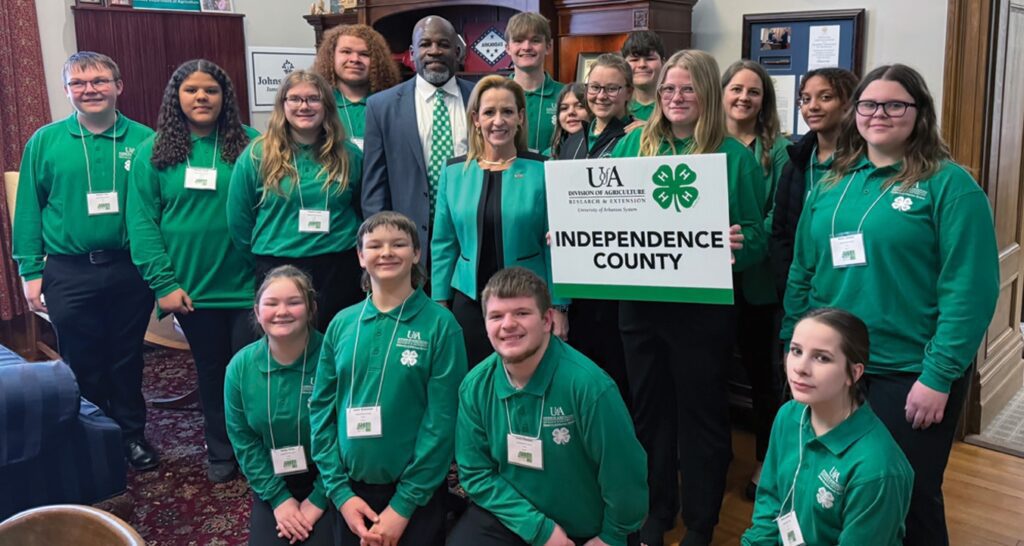
“UADA is constantly working to take the guesswork out of farming decisions and educate producers on the best government safety net strategies and production practices to increase profit. The need for our non-biased, research-based information has never been greater,” Fields said.
“One thing I appreciate most about Deacue Fields is that he wants to accomplish big things and he is able to convince others that we can do big things,” said Dr. John Anderson, senior associate vice president for the Division of Agriculture-Extension. “That is really important now … with his problem-solving mindset and talent for motivating and aligning people to get hard things done, I don’t think we could ask for a better leader for this time.”
Fields’ family legacy included exposure to all aspects of agriculture, from participating in 4-H to raising cattle and horses to degrees in agriculture. Adding faculty positions in research, teaching and sharing the latest information with producers prepared him for this moment. Fields is not just the man for the moment, but the best person for this time.