

30 Sep 2025 Auguste and Kacy Forrester’s farm-to-table vision is firmly rooted in community
By KD Reep
In Conway, Auguste and Kacy Forrester have cultivated more than food. They have cultivated connection. From their early days operating the popular WunderBus food truck to the eventual creation of WunderHaus, Conway’s beloved European comfort food restaurant that closed in November 2021, the couple has consistently woven together flavors, traditions and community in a way that reflects both their heritage and their values.
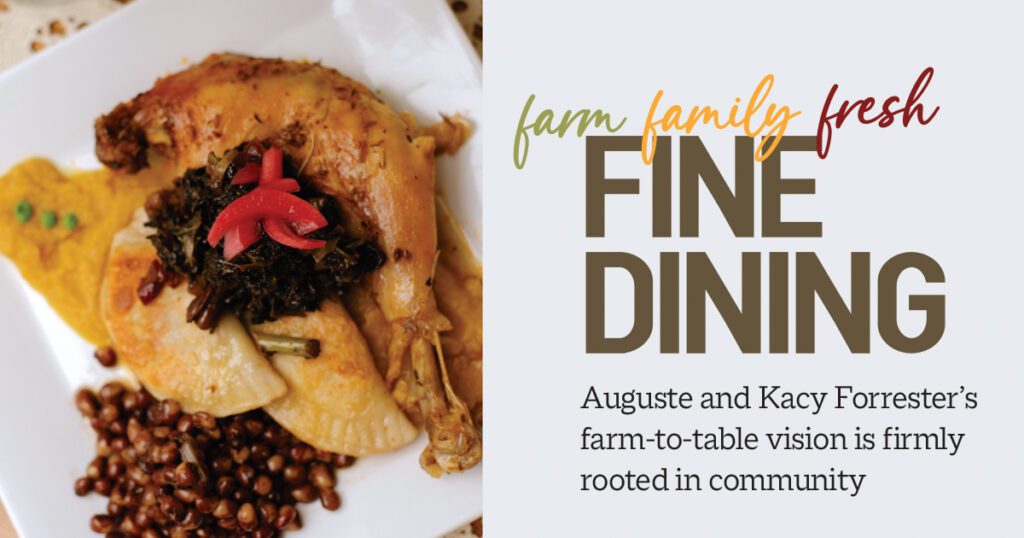
Although WunderHaus is no longer serving diners, the Forresters’ story continues to resonate with anyone who believes that food should nourish both body and soul.
The Forresters live on ten and a half acres just north of Conway where they raise chickens, ducks, goats and tend a garden. Their animals often feel more like pets than livestock, but the land is central to how they approach food. As Auguste explained, “Food is another language, and it is either a language of destruction, or [one of] love and comfort.” For the Forresters, farm-to-table is not a trend but a way of grounding themselves in truth and connection.
Their approach was evident at WunderHaus, where nearly all the protein was sourced from local farms such as Rabbit Ridge and Bradford Valley. Vegetables came from both their own garden and trusted growers like Heifer International’s Malcolm Stone, known for his lunar gardening methods. “Probably 90% of our protein was local and farm-raised and sustainable, preferably,” Auguste said. That commitment ensured that every dish told a story of Arkansas soil and the hands that worked it.
At WunderHaus, the couple built a menu inspired by European roots — think German pierogi, braised meats and handmade noodles — but which was also infused with the Southern produce of Arkansas. The food was complex yet familiar, often reminding diners of something their grandparents might have made. “Though a lot of our dishes seemed complex, once people tasted them, they would comment it reminded them of home,” Auguste said.
Kacy, a nurse with a passion for holistic health, brought her own perspective to the kitchen. “I feel like there’s an energy attached to food — where we get it and how it’s made,” she said. “Our purpose behind the restaurant was to infuse that into our dishes and hopefully bring people back to the table, back to conversation.” She specialized in desserts, crafting sweets that weren’t overly sugared but were instead balanced, the perfect finish to a meal rooted in care.
The Forresters love to entertain, whether that’s at a full restaurant or over a simple farm dinner. Auguste said people are the essential ingredient. “The people that showed up to our place were concerned about the food they ate, concerned about their health, concerned about how it affected them. They wanted to leave feeling better than they arrived,” he said. That sense of purpose translated into long evenings of shared meals, laughter and community.
While the couple is not currently running a restaurant, their influence continues. Auguste has returned to carpentry, but opportunities like pop-up dinners still call. For both of them, the deeper message remains. “Everything that you put in your body is a decision,” Auguste said. “Every day, we have the choice to choose health and teach ourselves how to cook a good meal, or support a restaurant that cares about your health, or support our habits and do what we think we deserve.”
Kacy added that the farm-to-table movement is not a fleeting trend. “These notions are no longer hipster ideas,” she said. “They are about getting back to the roots of who we are as a community, and how we can teach our children how to survive the coming days.” For her, gardening and cooking with local food are not just about flavor, but about legacy: “When we plant seeds with our children, those memories never go away,” she said.

POTATO & CHEESE PIEROGI
PIEROGI DOUGH
2 cups King Arthur unbleached all-purpose flour
½ tsp. salt
1 large egg
½ cup sour cream (or vegan sour cream)
¼ cup unsalted butter, softened
In a medium bowl, whisk together flour and salt. Add the egg and mix until the dough becomes clumpy. Work in the sour cream and softened butter until the mixture comes together into a slightly rough, sticky ball. Using only your fingertips, knead and fold the dough on a lightly floured surface. Avoid adding more flour unless absolutely necessary. Continue kneading until the dough becomes less sticky but still moist.
Rest the dough: Wrap it tightly in plastic wrap. Refrigerate for at least 30 minutes and up to 48 hours.
Roll and cut the dough: Divide the dough in half. Roll one portion out to ⅛-inch thickness. Cut circles with a 2-inch round cutter. Repeat with remaining dough. (Tip: Trim scraps into small pieces and save for simmering soups.)
potato and cheese filling
2 cups mashed potatoes (well-drained and cooled)
½ cup feta cheese, crumbled
¼ cup mozzarella cheese, shredded
½ cup caramelized onions (cooled)
¼ cup fresh parsley, chopped
Salt and pepper to taste
In a medium bowl, combine the mashed potatoes, feta, mozzarella, caramelized onions and parsley. Mix until evenly blended. Taste and season with salt and pepper. Use immediately to fill pierogi dough, or cover and refrigerate up to 2 days. Make sure potatoes are well-drained before mashing — excess moisture can make the filling watery. For extra creaminess, stir in a tablespoon of sour cream. This filling pairs especially well with sautéed onions and butter when serving the pierogi.
filling your pIerogi
Place about 1½ teaspoons of filling of choice (potato, cheese, sauerkraut or sweet fillings) in the center of each circle. Fold dough over to form a half-moon, wet fingertips and pinch edges firmly to seal. Crimp edges with the tines of a fork.
Cooking: Boil pierogi in 2.5 quarts of water with a tablespoon of salt until they float (about 2–3 minutes), then sauté in butter with onions until golden. If making a larger batch, refresh water.
Make ahead and freeze: Shaped pierogi can be frozen on a baking sheet, then stored in a freezer bag for up to three months.
Butternut squash purée
1 medium butternut squash,
peeled, seeded and cut into cubes
Salt and pepper to taste
1–2 Tbsp. olive oil (or melted butter)
1 tsp. of sweet curry, ½ tsp. of cinnamon,
¼ tsp. nutmeg, ¼ tsp. paprika
¼ cup orange and mango juice (or orange juice)
Roast the squash: Preheat oven to 400°F (200°C). Toss cubed squash with olive oil, salt and pepper. Spread on a baking sheet and roast for 25–35 minutes, or until tender and lightly caramelized.
Purée: Transfer roasted squash to a bowl. Add the rest of the ingredients and use an immersion blender (or food processor) to blend until smooth. Adjust seasoning to taste.
Slow-roasted chicken thighs and legs
4–6 farm-raised chicken thighs
and/or legs, bone-in, skin-on
1 Tbsp. Herbs de Provence
1 Tbsp. paprika
1 Tbsp. kosher salt (or to taste)
½ tsp. freshly ground black pepper
¼ cup olive oil
1 Tbsp. sesame oil
Preheat oven to 300°F (150°C). Rinse and pat chicken pieces dry with paper towels. Rub with oil. Season generously with Herbs de Provence, paprika, salt and pepper. Arrange chicken in a single layer in a roasting pan or Dutch oven. Roast covered for 4-5 hours, until meat is very tender and skin is golden. For crispier skin, increase oven to 425°F for the last 10 minutes of cooking. Rest chicken for 5 minutes before serving.
Ozark-Razorback cowpeas
(Vigna unguiculata variety)
1-pound dried cowpeas, rinsed and sorted
6 cups homemade chicken broth
(cover peas by 2 inches)
2 pork ribs (meaty, bone-in)
Salt and freshly ground pepper
Place cowpeas in a large bowl, cover with water and soak overnight. Drain before cooking.
Quick-soak method: Cover cowpeas with water, bring to a boil for 2 minutes, then let stand 1 hour. Drain. In a large slow cooker or Dutch oven, combine soaked cowpeas, chicken broth and pork ribs. Cover and cook in slow cooker, on stovetop or Dutch oven.
Slow cooker: Place on low for 6-8 hours or on high for 3-4 hours.
Stovetop/Dutch oven: Simmer gently over low heat for 1½-2 hours, adding more broth or water as needed.
Remove pork ribs. Shred any meat from the bones and stir back into the cowpeas. Salt and pepper to taste. Serve hot.
Farmers’ market kale with craisins and pecans
1 large bunch kale,
stems removed and leaves chopped
1-2 Tbsp. olive oil
¼ cup dried cranberries (craisins)
¼ cup pecans, toasted and roughly chopped
Salt and pepper
1 lemon juiced
Heat olive oil in a large skillet over medium heat. Add kale and sauté until wilted and tender, about 4–5 minutes. Stir in cranberries and pecans. Cook for 1–2 minutes more, just until warmed through. Salt and pepper to taste. Add lemon juice. Serve warm as a side dish.
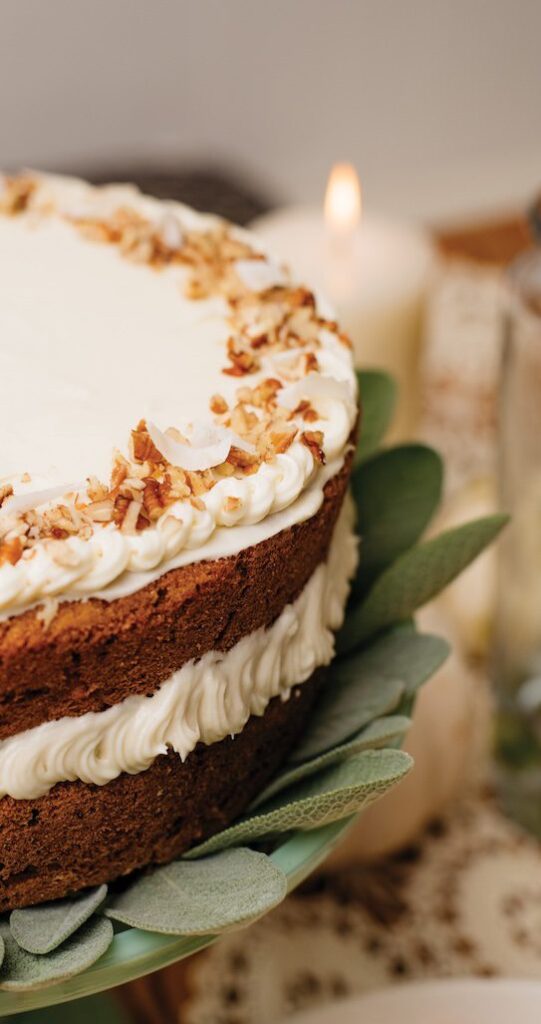
Carrot cake
1½ to 1¾ cups neutral oil (canola or vegetable)
3 cups all-purpose flour
2 tsp. baking soda
2 tsp. baking powder
1 tsp. salt
1 tsp. cinnamon
½ tsp. nutmeg
(Optional) ½ tsp. ground ginger or clove for extra spice
1 cup granulated sugar
1½ cups packed brown sugar
5 large eggs, room temp
1 Tbsp. vanilla extract
2 cups finely shredded carrots packed (It will taste better with shredded fresh carrots, but a bag of pre-shredded will do.)
1 cup drained, crushed pineapple (very well drained)
1 cup shredded coconut (sweetened or unsweetened, your choice)
1 cup chopped pecans
Heat oven to 350°F (175°C). Grease and line two 9-inch round cake pans (or a 9 x 13 pan) with parchment. Mix dry ingredients: In a medium bowl, whisk flour, baking soda, baking powder, salt, cinnamon, nutmeg, (and ginger or clove if using). Mix wet ingredients: In a large bowl, whisk oil, sugars, eggs and vanilla until smooth. Combine dry and wet ingredients and mix gently until just combined (don’t overmix). Fold in carrots, pineapple, coconut and pecans with a spatula.
Bake: Divide dough evenly into pans. Bake 30-35 minutes (for rounds) or 40–45 minutes (9×13), until a toothpick in the center comes out clean. Cool completely in pans 10 minutes, then remove to wire racks.
Frosting (classic cream cheese)
16 oz. cream cheese (softened)
½ cup butter (softened)
4 cups powdered sugar (sifted)
2 tsp. vanilla extract
Beat until smooth and fluffy, then spread over cooled cake.
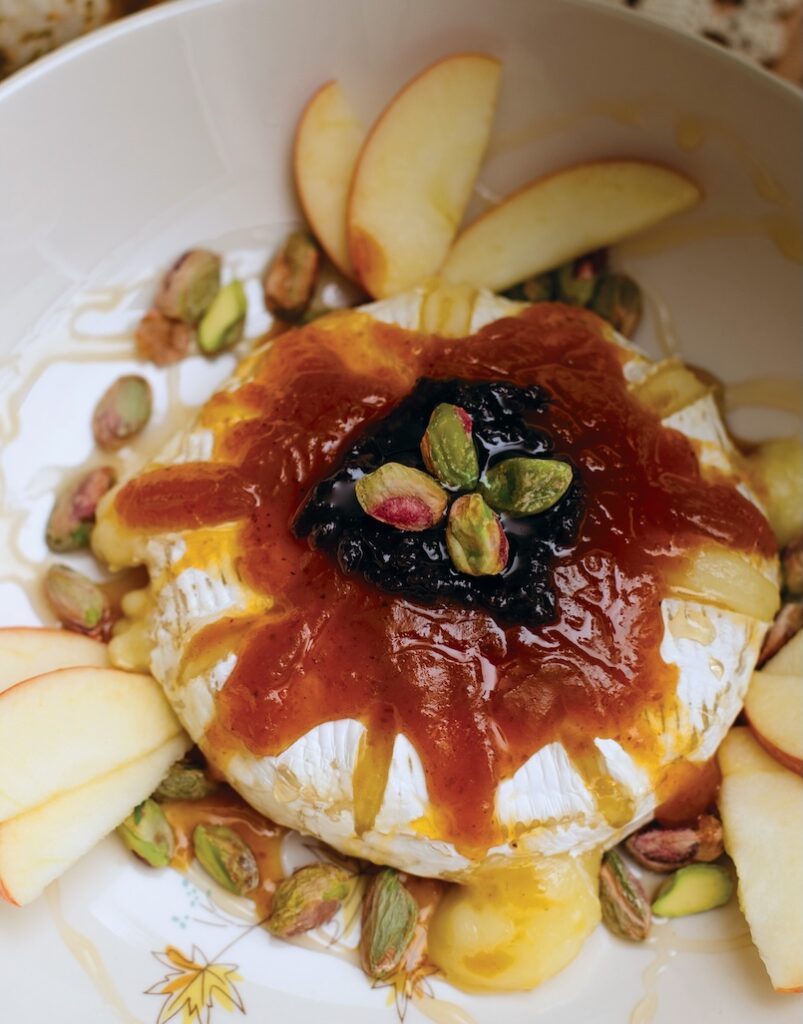
Brie with fall-flavored toppings
After baking a favorite Brie recipe, layer these ingredients on top and serve while it is warm and bubbly:
1 Tbsp. fig butter
1 Tbsp. pumpkin butter
Drizzle of honey
Salted pistachios
Chilled apple slices
A favorite assortment of crackers