

04 Nov 2025 A life of ropin’, ridin’ and rodeo
By Phyllis Ormsby
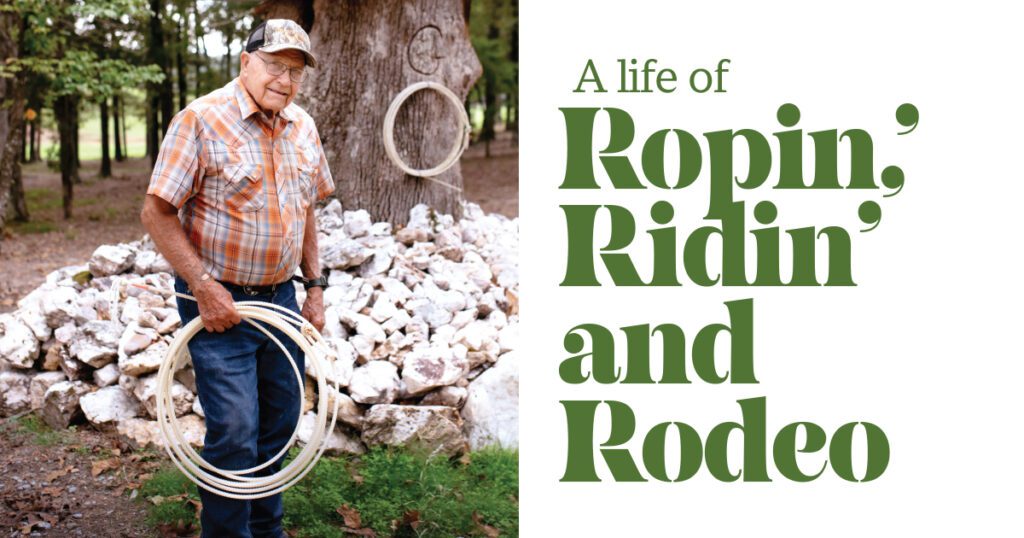
Knots and ropes have anchored Dub Grant’s life. The 86-year-old Arkansas native started creating lariat ropes when he was just a teenager, eventually building a company that shipped ropes all over the world.
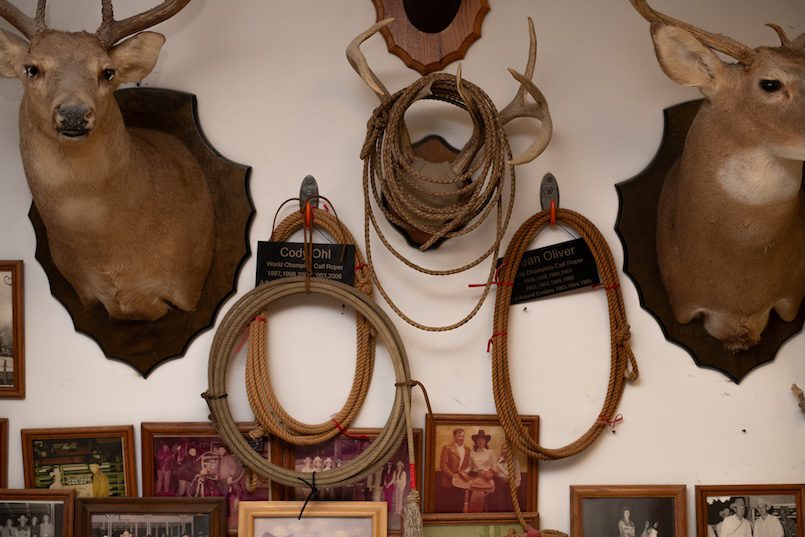
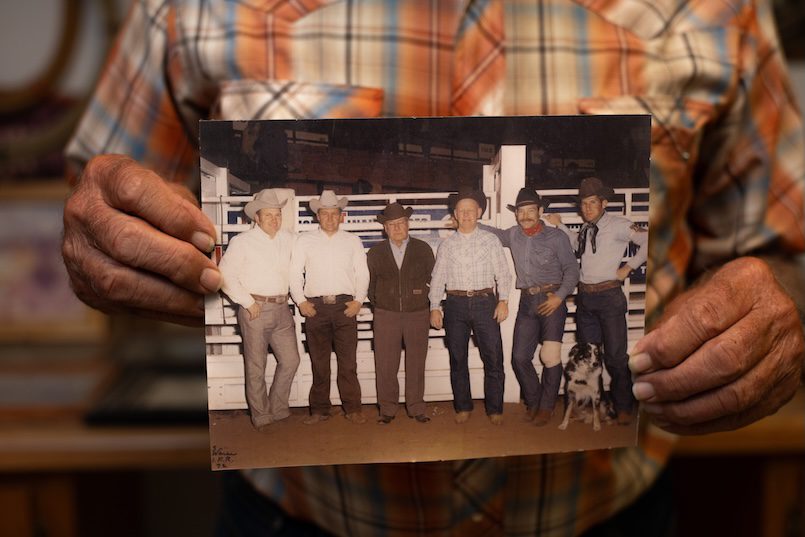
Lots of world champion cowboys have swung and sworn by Dub Grant ropes, as evidenced by the many photos that line his workshop at his ranch outside of Benton. Many of the cowboys in those photos are recognizable even to non-rodeo fans, like the richest cowboy in pro rodeo history, Trevor Brazile. Brazile holds the record for the most world championship titles in the Professional Rodeo Cowboys Association with 26.
Other photos show Tuf Cooper, a four-time World Champion tie-down roper and PRCA All-Around World Champion, along with Tuf’s dad, Roy Cooper, an eight-time World Champion and Hall of Fame member. Another photo features Stran Smith, also a World Champion roper (who happens to be Tuf Cooper’s uncle). Other champion cowboys who were customers include Joe Weaver, Dean Oliver and Monty Lewis.
Grant’s journey started when he and his brother, Bud, were 9 and 10 years old. They were already doing trick riding and rope tricks at rodeos. “By the time we were 14 and 15 years old, we could handle a rope real good,” he said. Soon, the brothers built a roping pen and learned how to rope calves. “By the time we were around 20 years old with all our early experience handling ropes, we really started winning some money,” Grant said.
The brothers met a man in Little Rock who showed them how they could make their own ropes. “We were probably about 17 and 18 years old. People really started liking them, so we’d take some to rodeos with us and sell them. So it kind of got started that way,” Grant said.
After that, life got even busier. Grant met his wife, Doll, at a rodeo and they were married in 1966. She was a barrel racer and the two of them traveled to different rodeos about five days a week, starting from Memorial Day to Labor Day. “My wife and I had a Chevrolet pickup and a side-by-side trailer that held two horses and a camper on the back of the truck. We would take the back glass out of our truck so we could crawl back and forth into the camper. It’s nothing like it is now,” Grant said, chuckling.
“I went somewhere every Wednesday through Sunday. Loretta Lynn had a rodeo over in Nashville. Every Sunday afternoon, I roped over there. Every Monday, I would go to Cherokee Village. I’d come back home and make ropes until it was time to go again,” he said.
He put so many miles on his truck that for several years he bought a new one every year. “But back then you could get a new truck for $5,000 to $7,000. And gas was 28 cents a gallon when I got married,” Grant said.
He did some team roping with his brother but mainly focused on his calf roping and won dozens of buckles, saddles and prize money. “There for a while when I was trying to win the world championship, I roped 105 calves and only missed five that year,” he said.
And as his reputation grew, so did the rope business. At one point, he had four or five employees and sent ropes to Brazil, Panama, New Zealand, Australia, Canada and lots of stores in the western states. Big distributors in Texas, like National Roper’s Supply and Teskey’s Western Store, would place orders for 500 ropes at a time. “We really had to work hard to fill those big orders,” Grant said.
Much has changed since he first started making ropes, he said. “At first, ropes came in these big 600-foot coils. You had to stretch them out with a tractor in the field to take the kinks out of them and then you had to leave them out in the pasture with some tension on them. Then you cut them, put the knots in them and put the hondo in them,” he said. “Now, they have machines that just make one rope at a time. They don’t come in small coils anymore.”
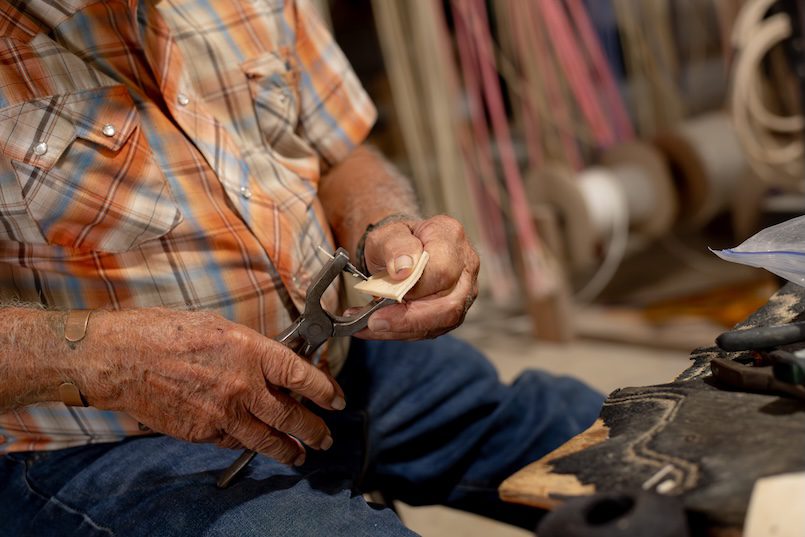
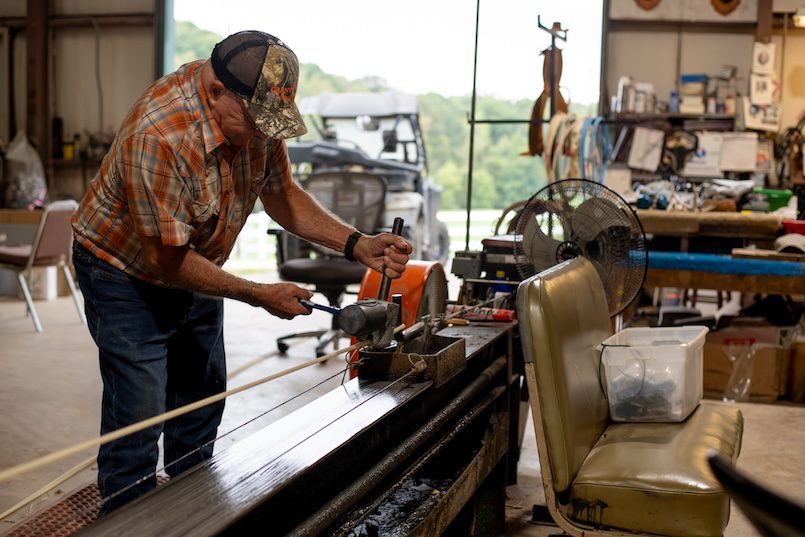
A rope is made of strands of polyester or nylon that are twisted tightly and coated with hot wax. “I have a guy out in Texas who twists them for me,” Grant said. “I have to chop off each end and tie the knots I want. It’s really simplified it a lot.”
He sold his company a year and a half ago, but you can still find him most days in his shop, cutting ropes to size, tying those knots and creating the hondo, the reinforced loop at one end that turns a plain rope into a lariat. “I still sell some but nothing like I used to,” he said.
He and Doll had been married 49 years when she passed away in 2015. Grant’s brother passed away in 2022. It was probably 20 years ago, he said, when he sold off his horses and the herd of cows. With his family’s approval, he even sold off all the trophy saddles he, his wife and daughter Morel had won during their rodeo years. “I did keep my World Championship saddle and one of my wife’s and one of my daughter’s,” he said.
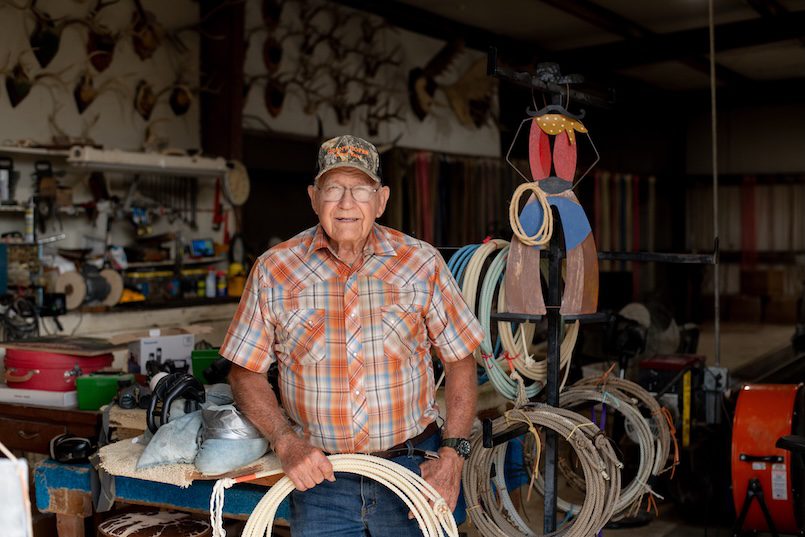
“Today I just mess with these ropes a little bit and keep my deer hunting places here on my place fixed up,” Grant said. “My good health? I give the Lord the credit for it. It’s been a wonderful life. I could see the Lord taking care of me all the way.”